
The planting register
Every plant the forest names, with what to look for when you stand in front of it. A photograph carries a name only where the plant could be identified with confidence.
How to read an entry
- Name
- The common name.
- Scientific name
- In italics, where the exact species is known.
- Look for
- What you would see on the plant.
- Worth knowing
- One fact about the plant.
- Tags in the photos
- Numbers read from the white tags on the trees. Each opens the photograph of that tree. The small print on every tag is blurred for privacy, and on some photographs that covers the number too.
Fruit trees
-
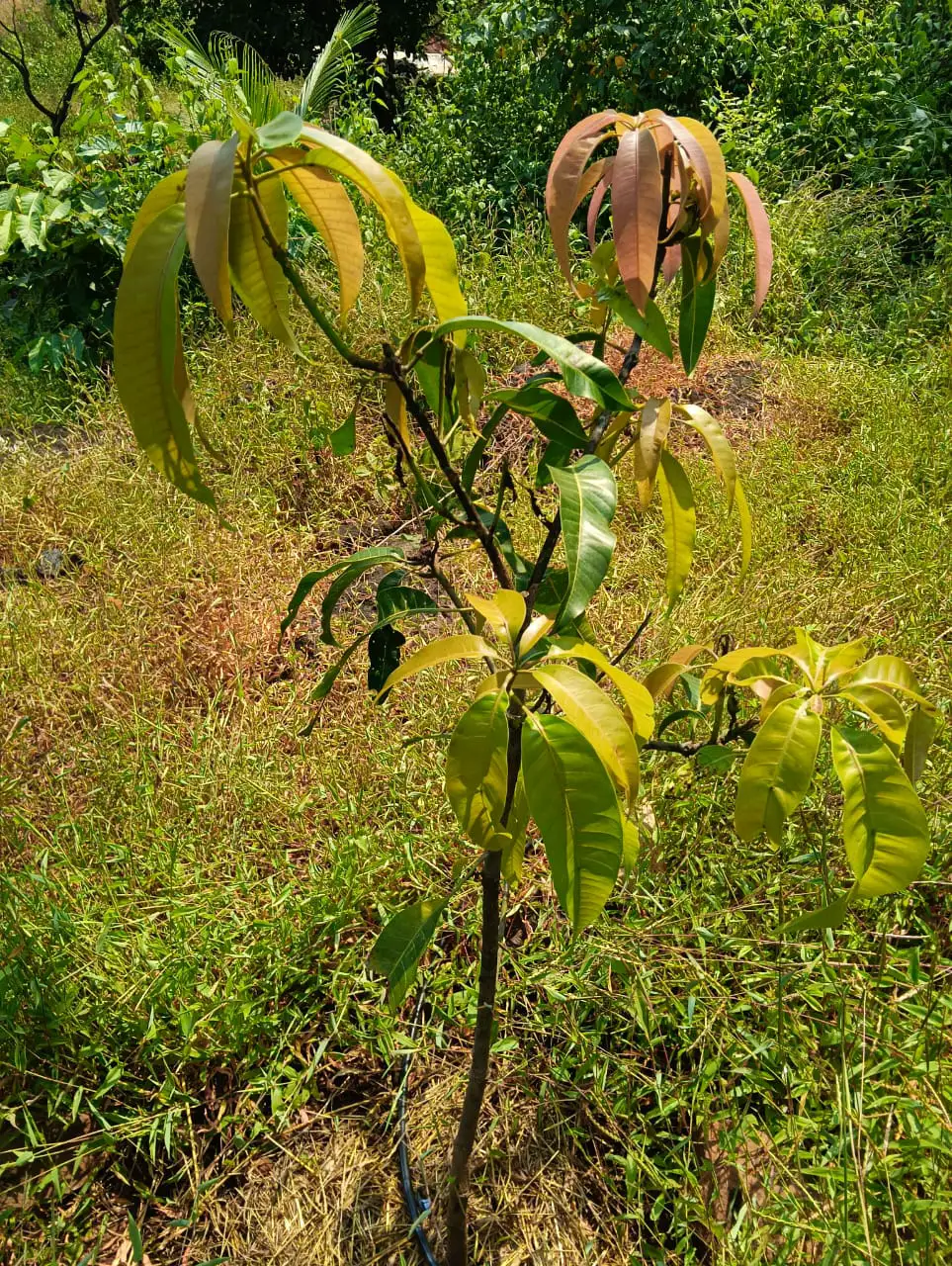
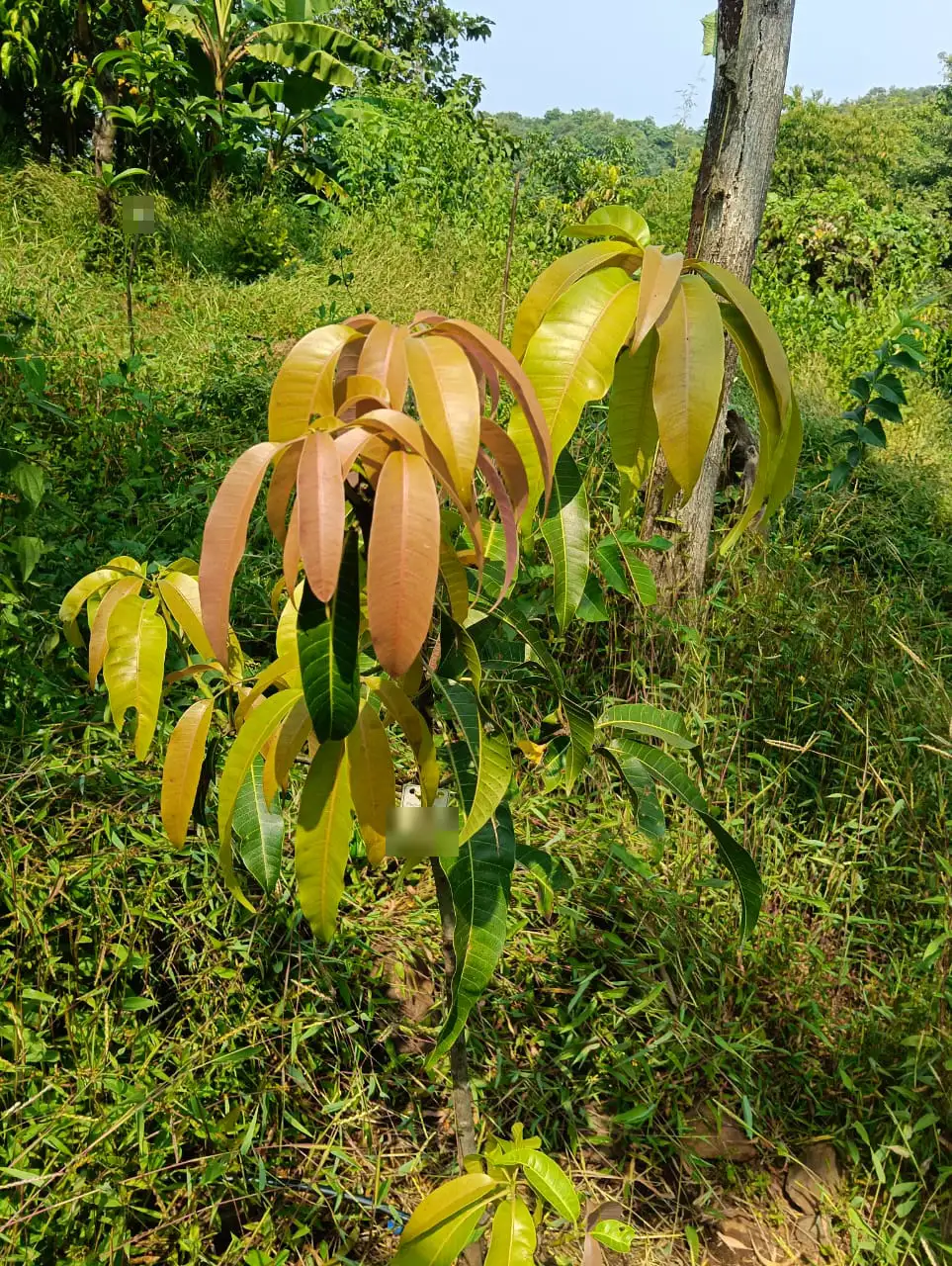
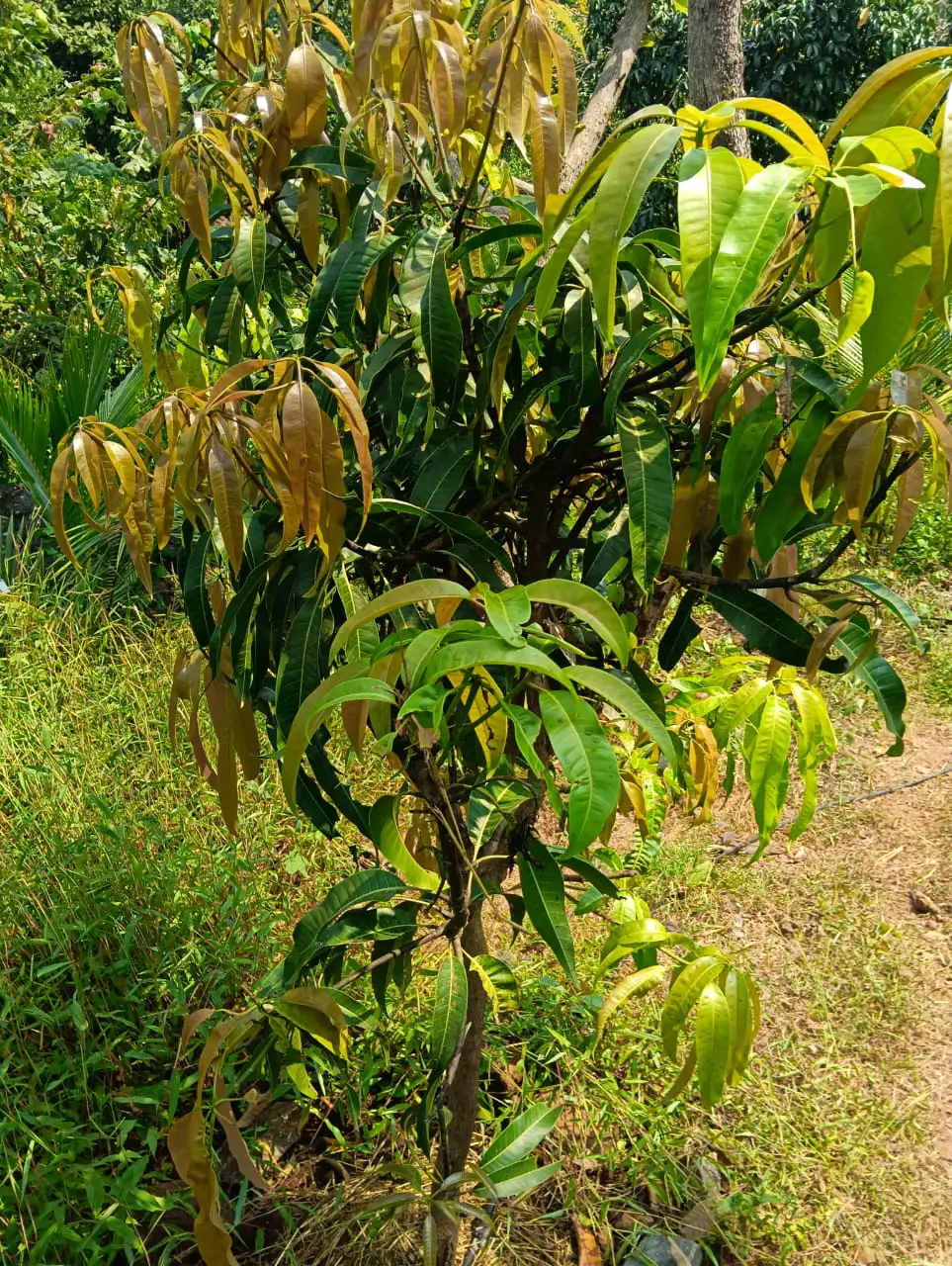
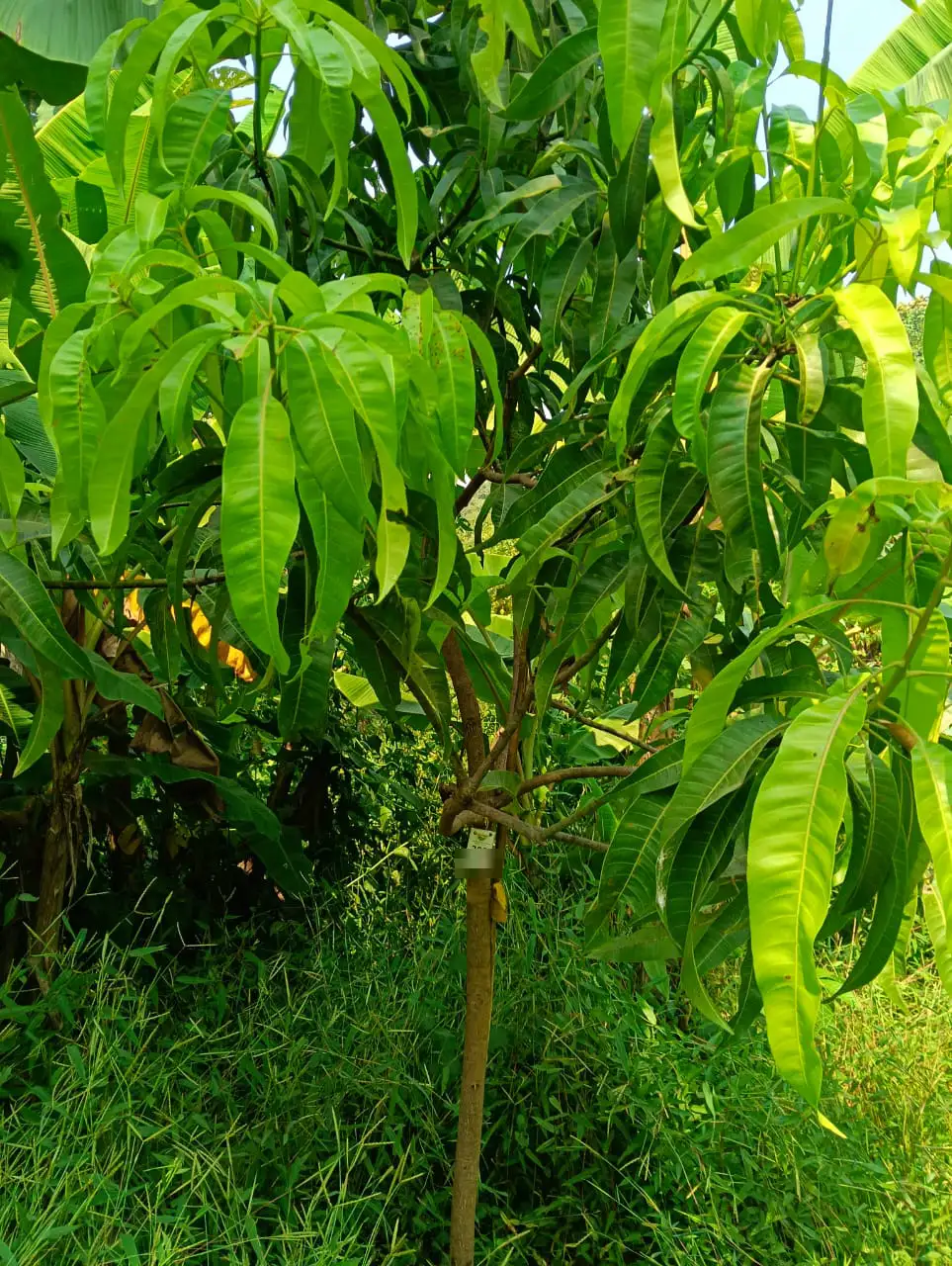
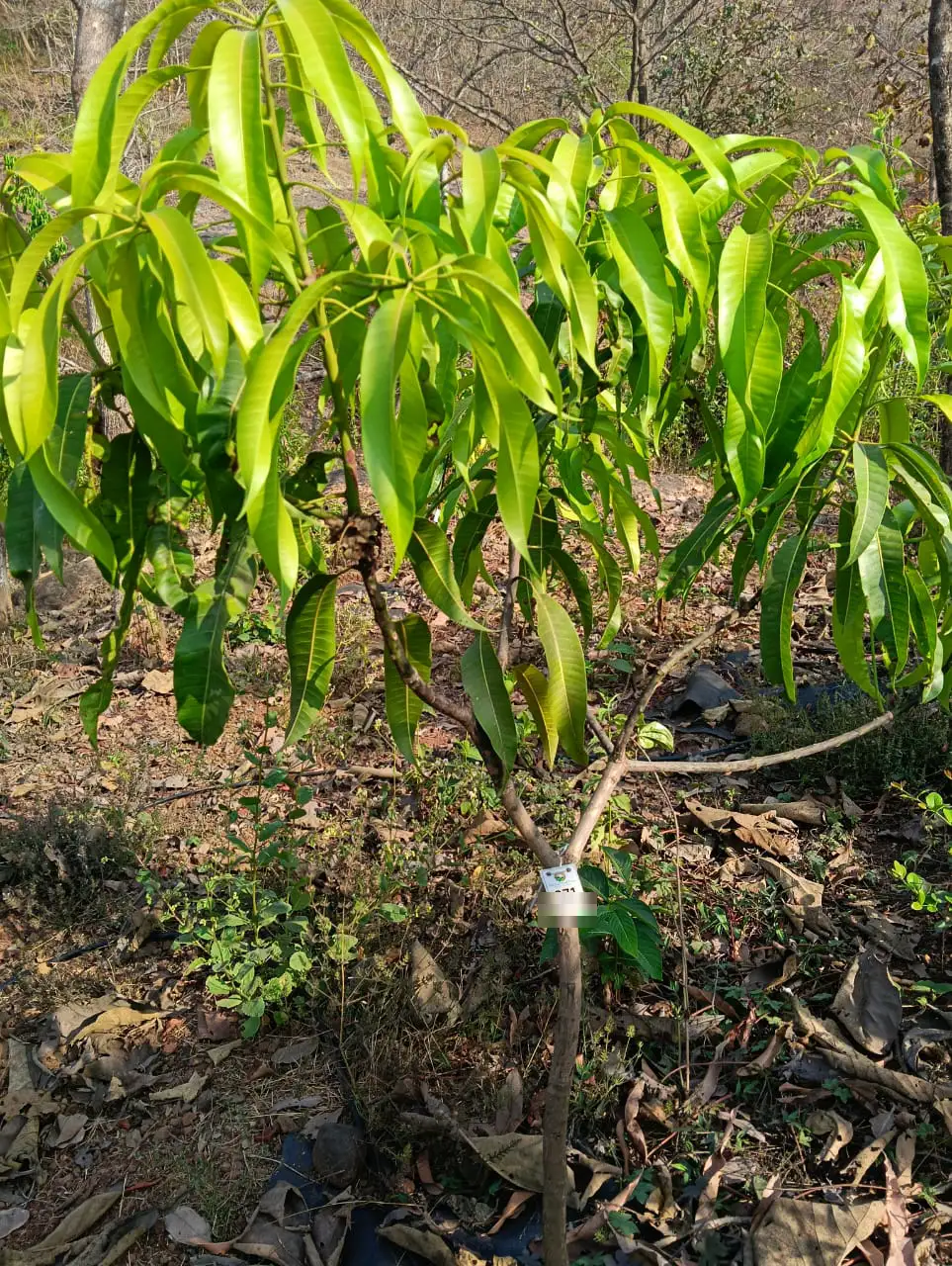
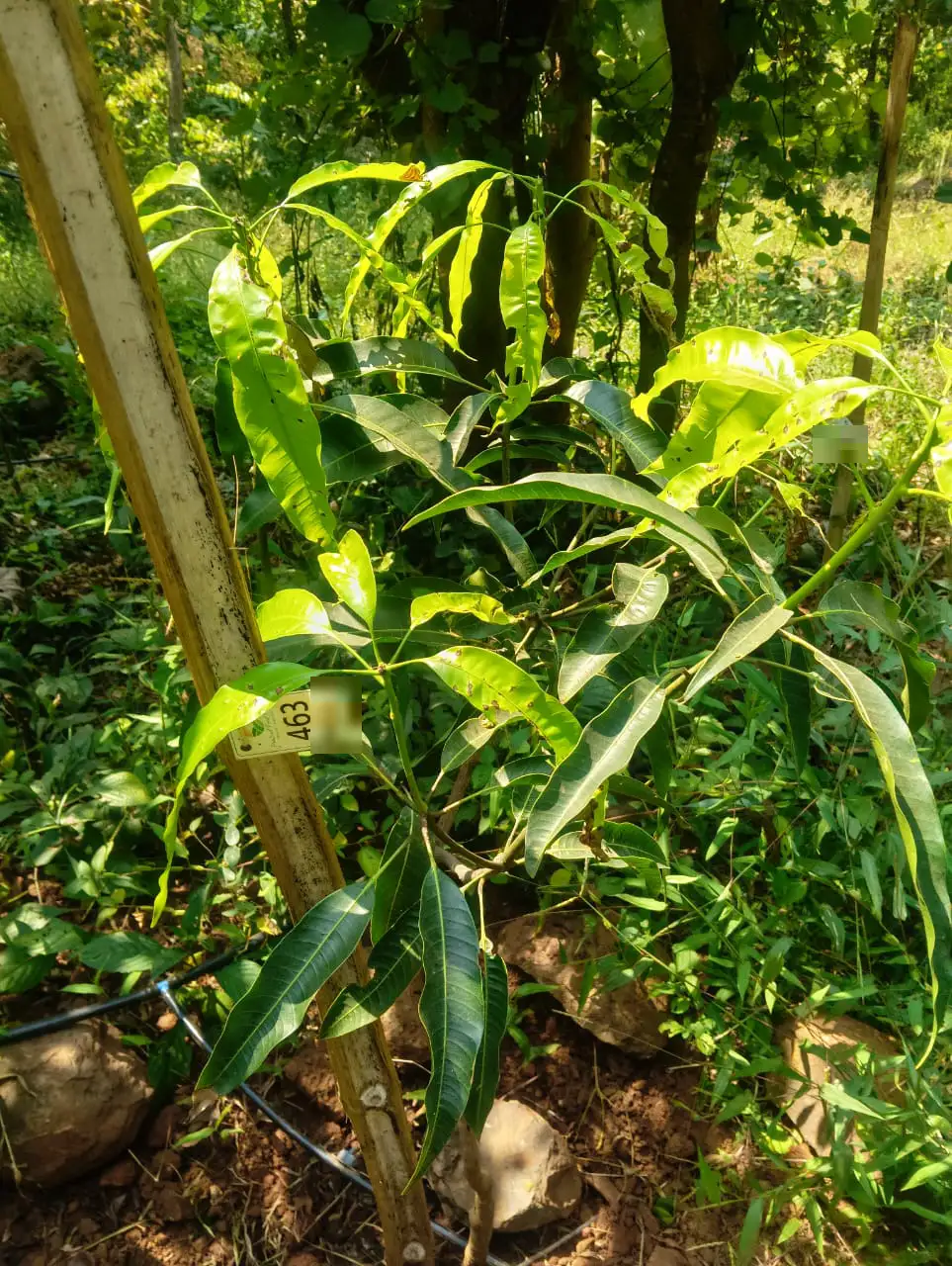
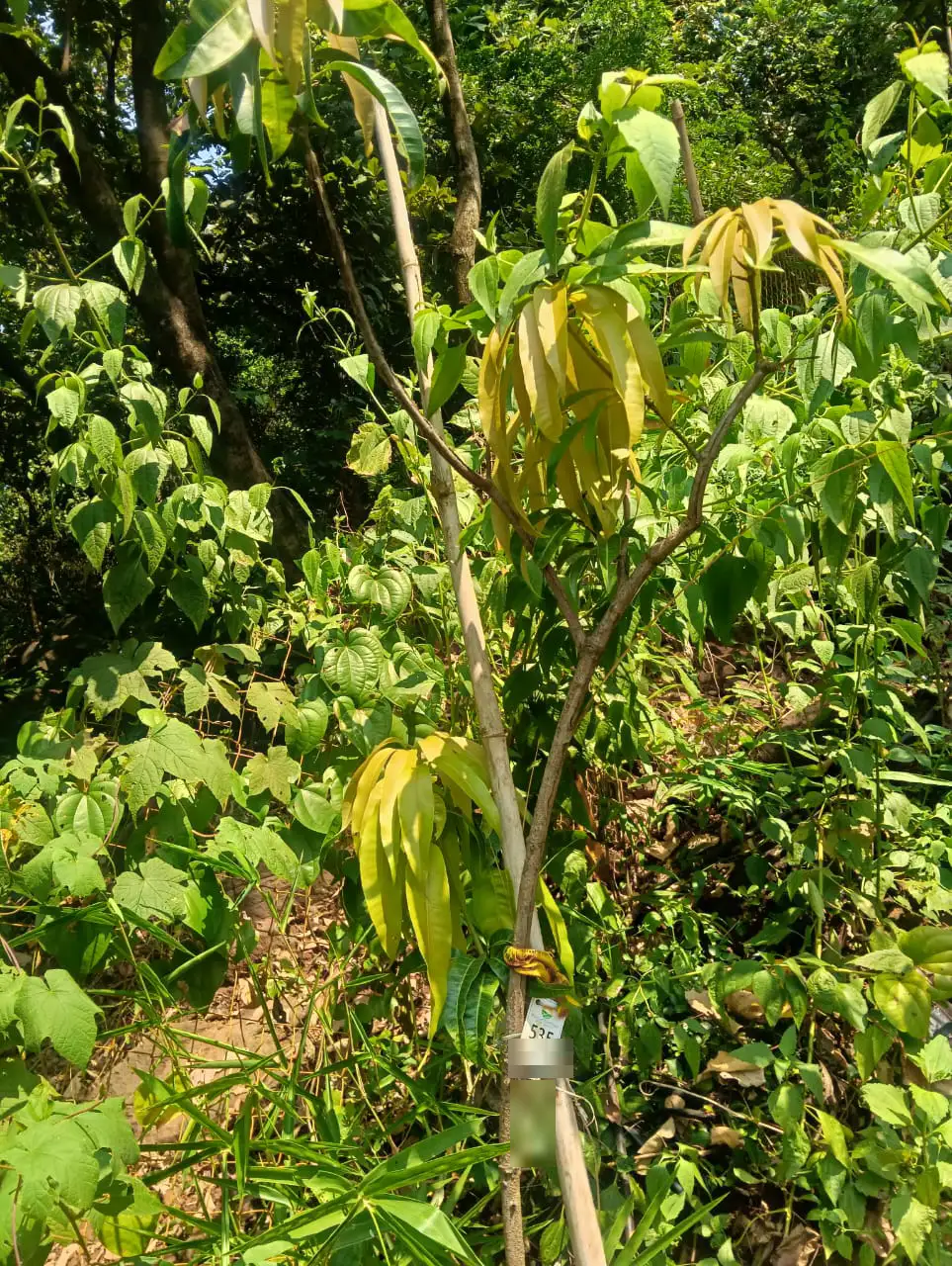
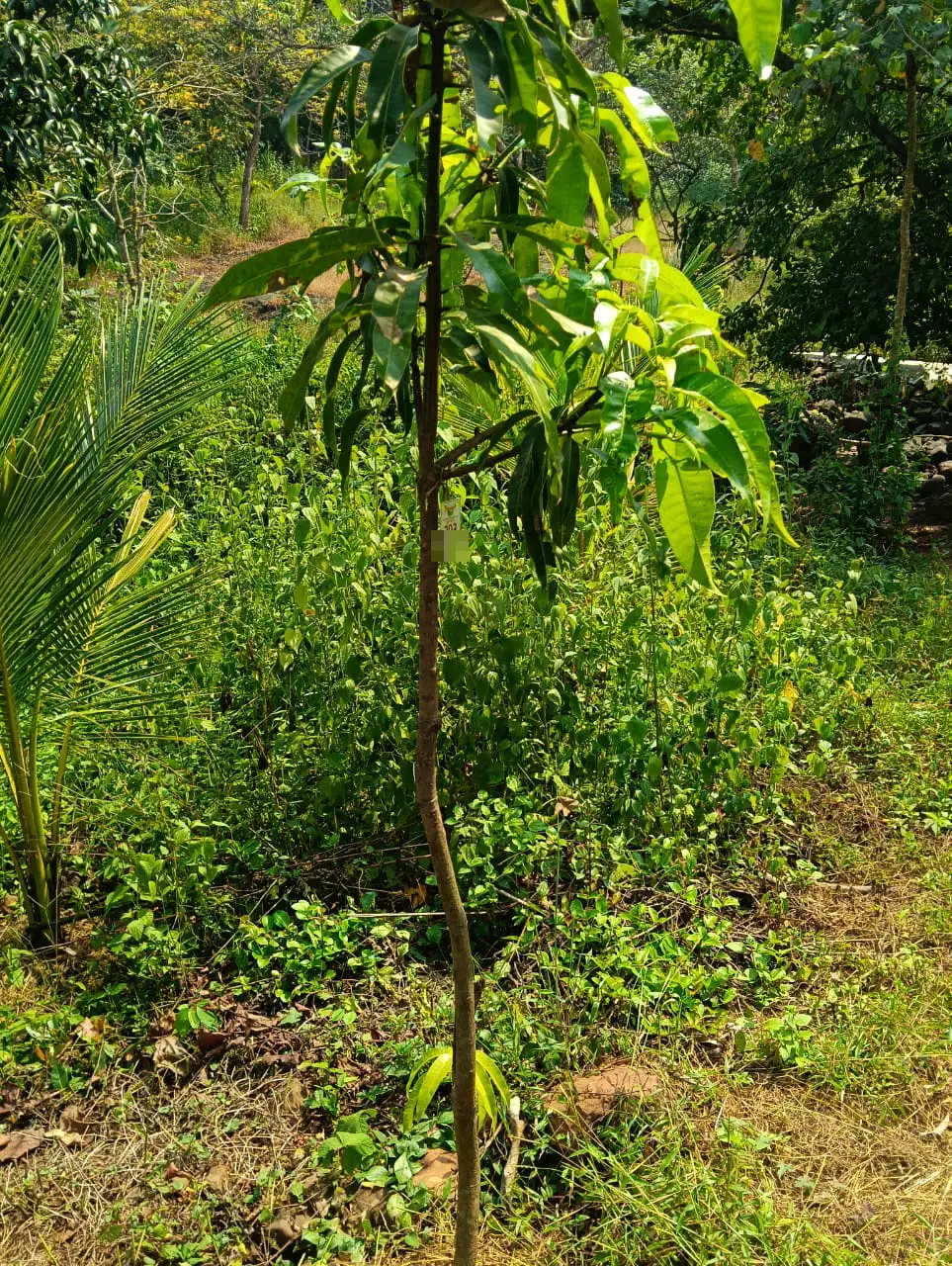
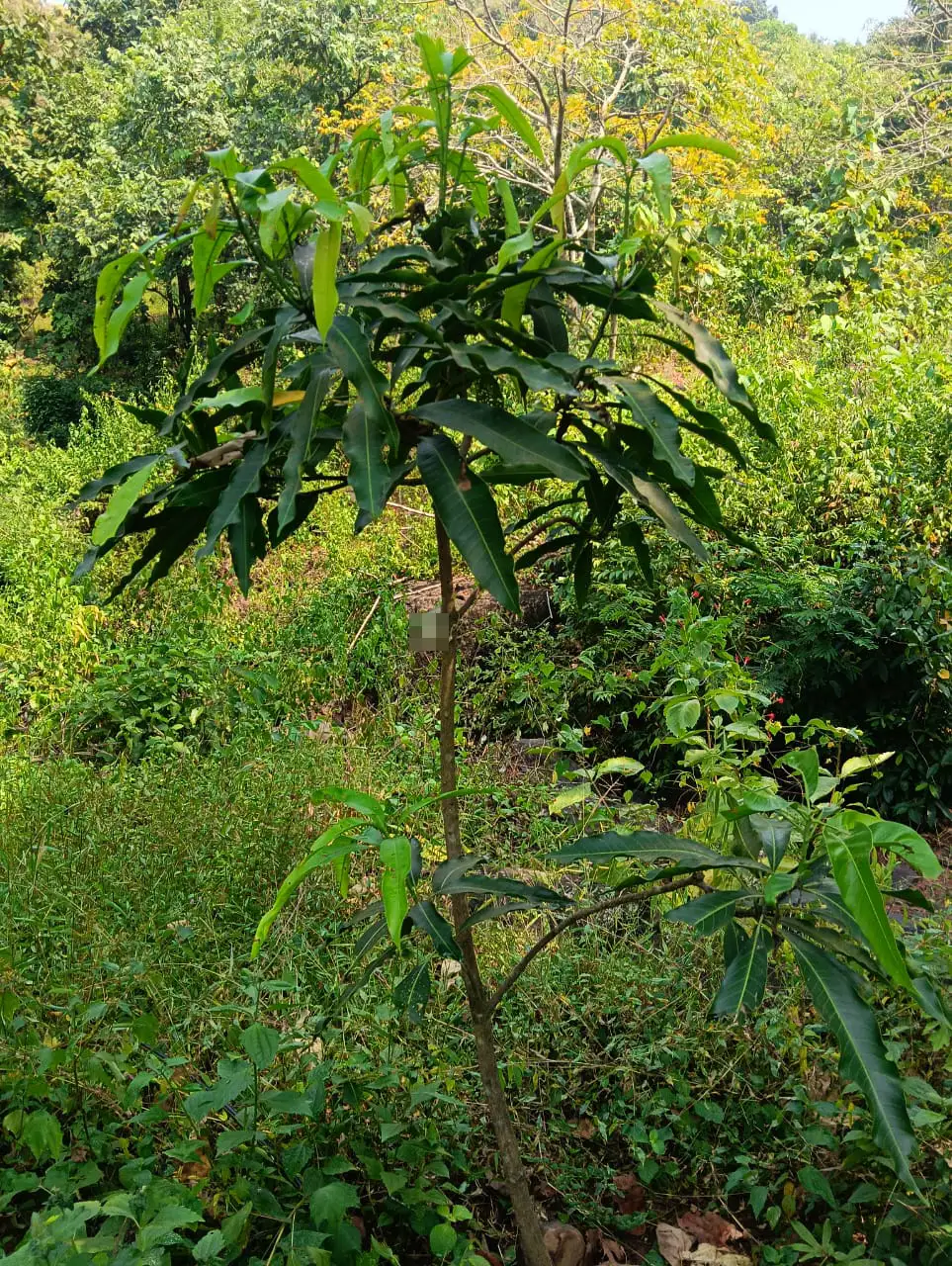
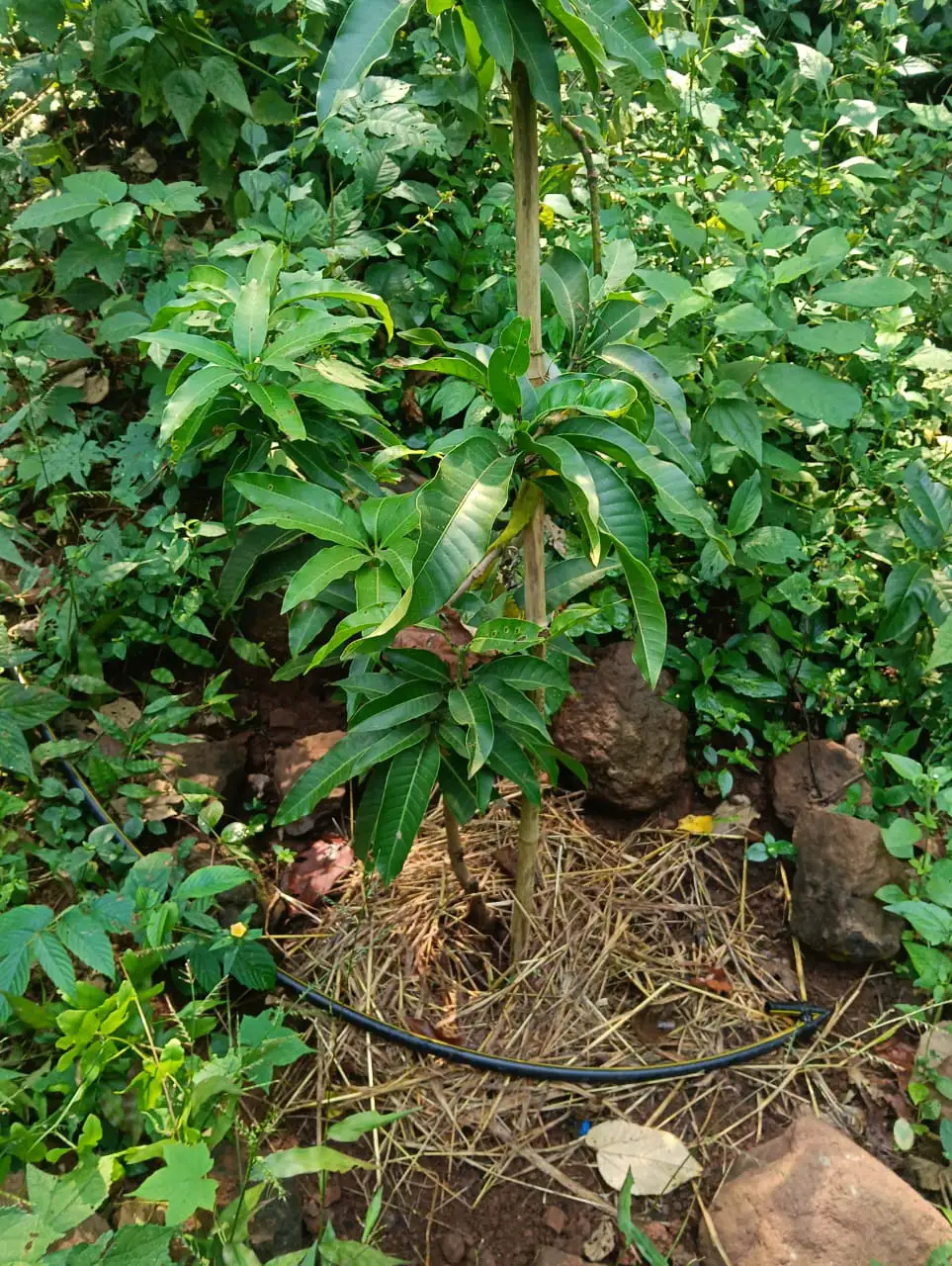
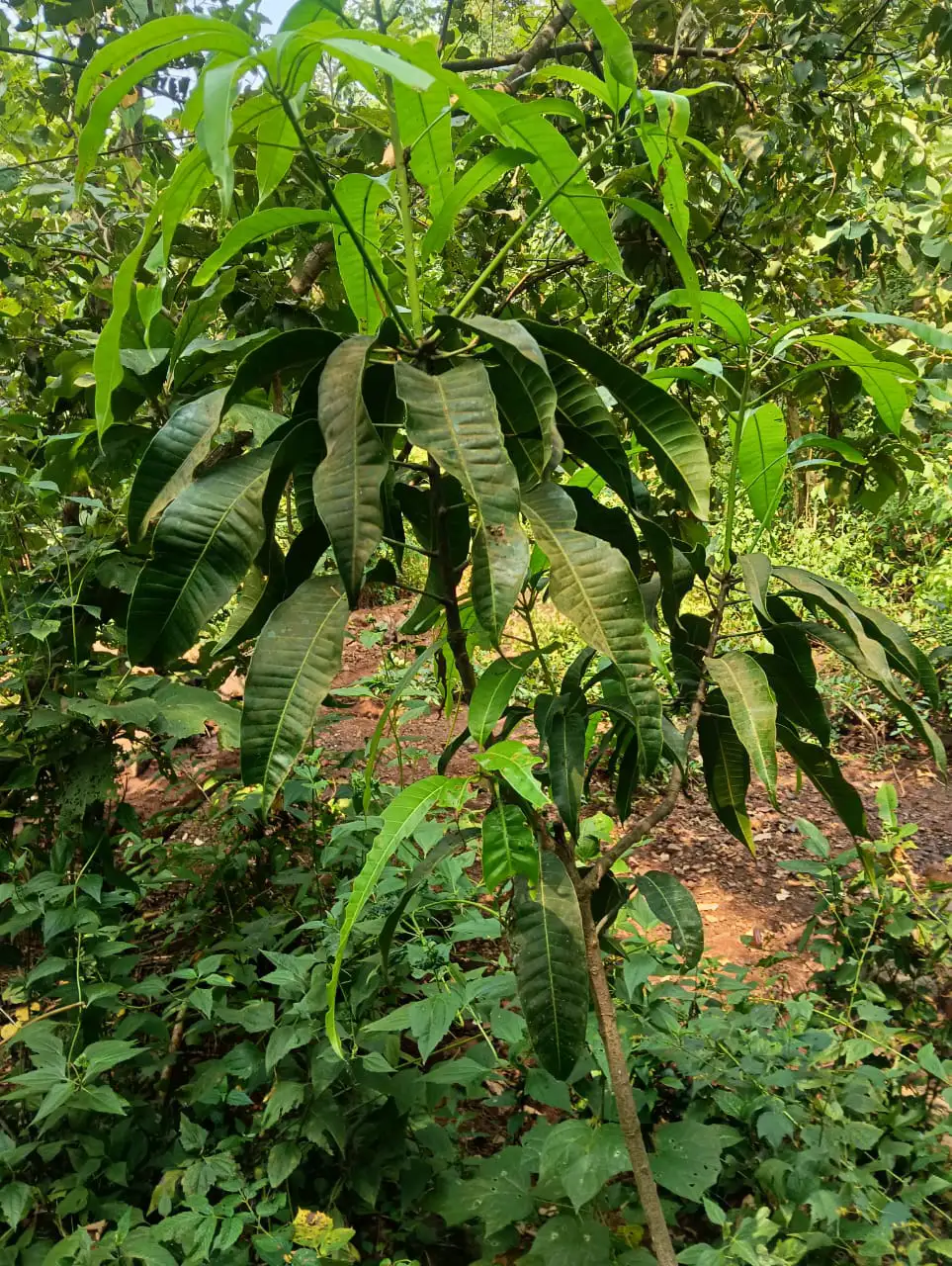
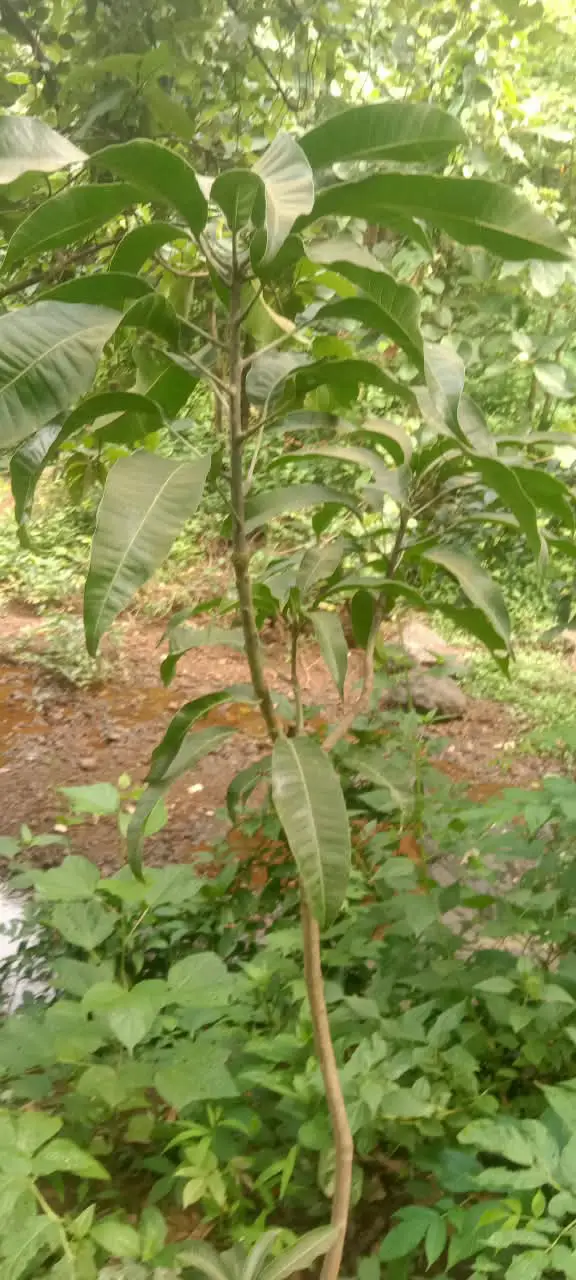
Mango
Mangifera indica- Look for
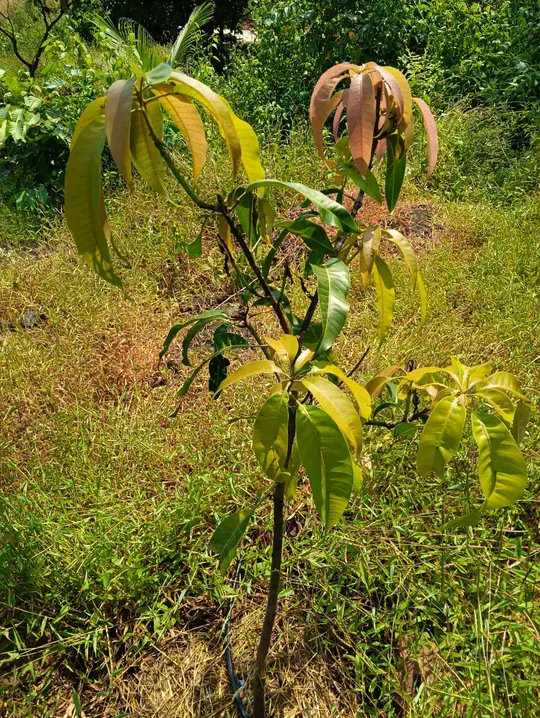
- Long, narrow leaves with a pale midrib, bunched at the tips of the shoots. New leaves come out copper-red and limp, then harden to dark green.
- Worth knowing
- Mango is the national fruit of India, and it belongs to the same plant family as cashew.
-
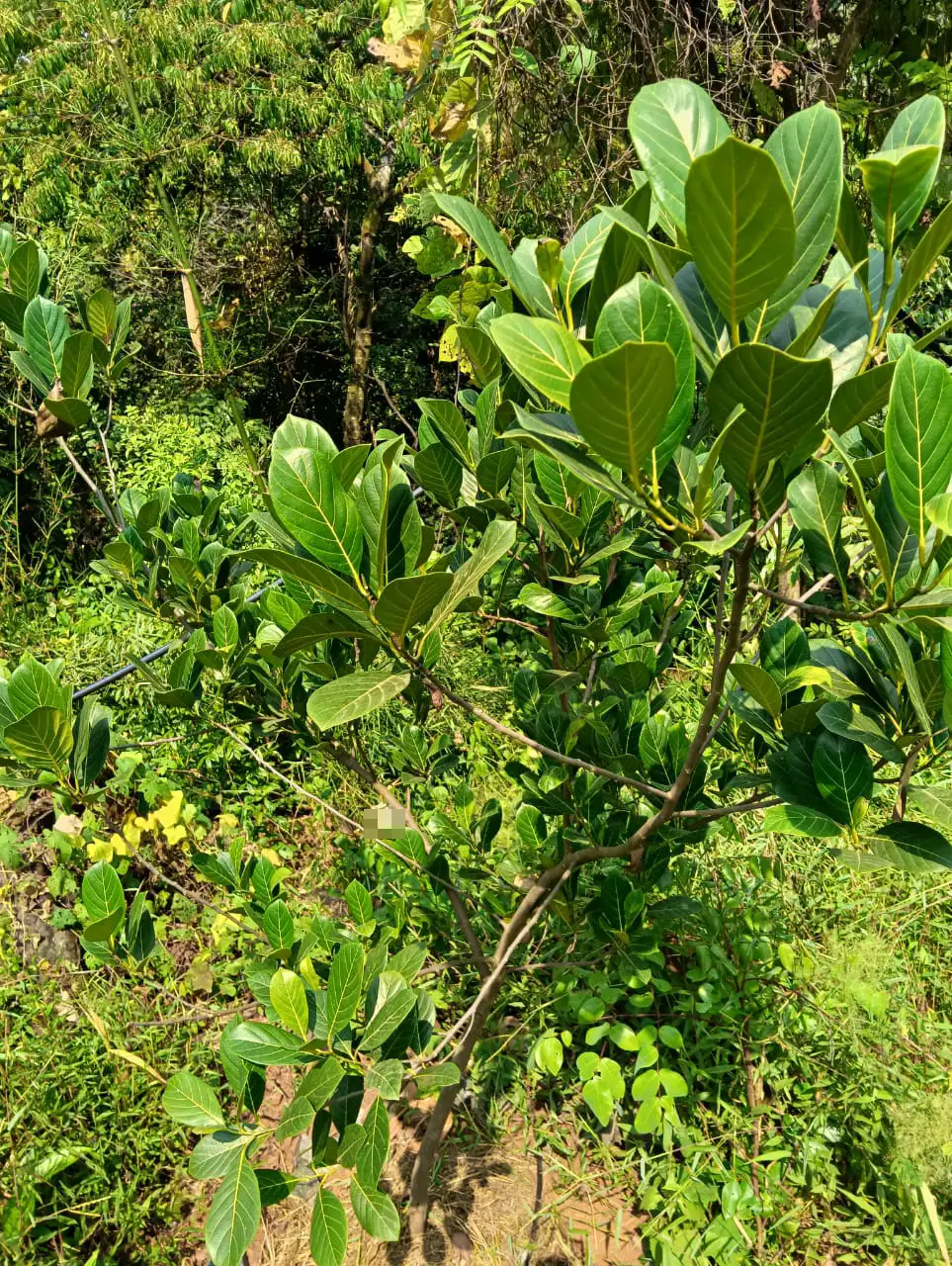
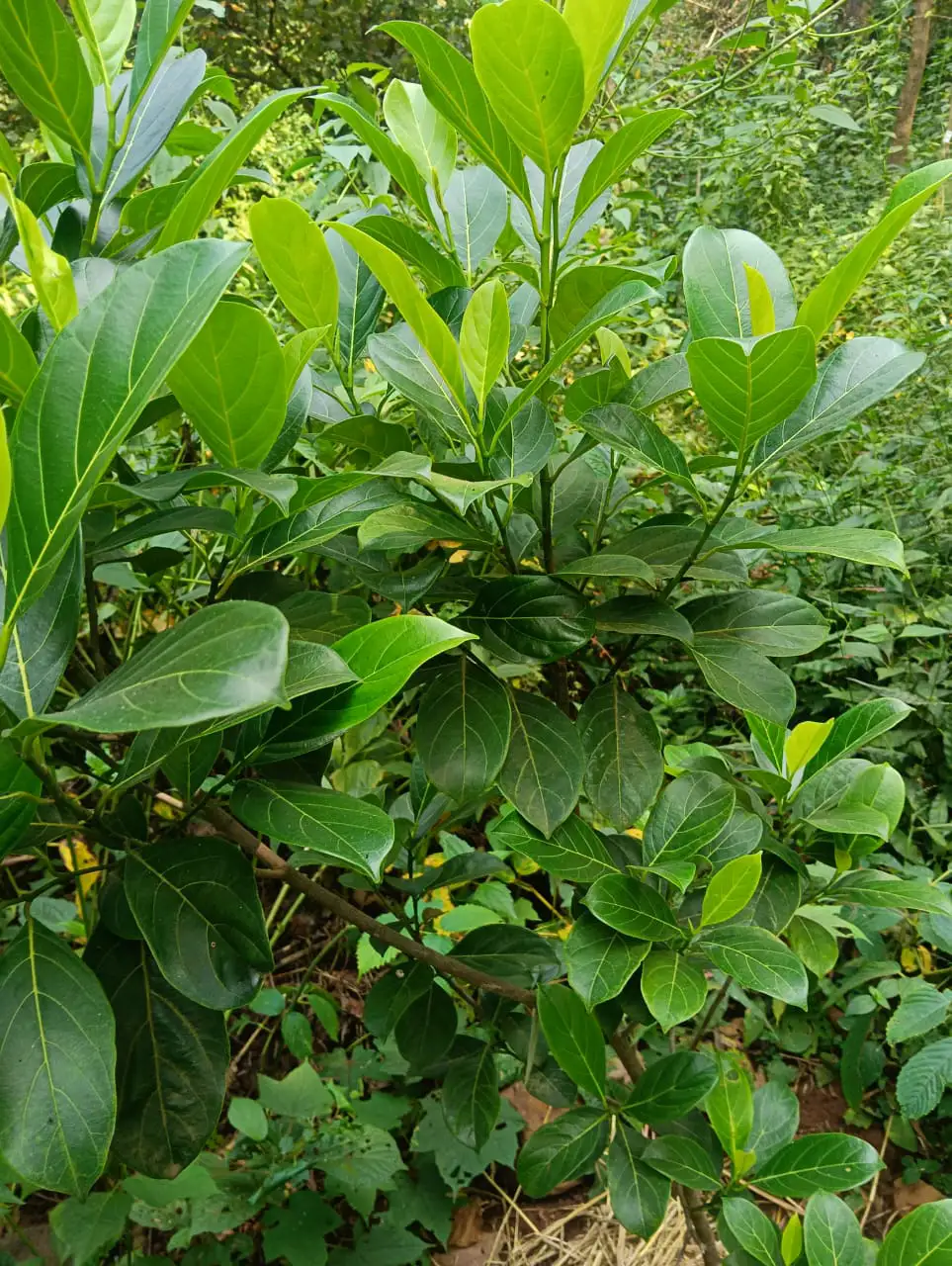
Jackfruit
Artocarpus heterophyllus- Look for
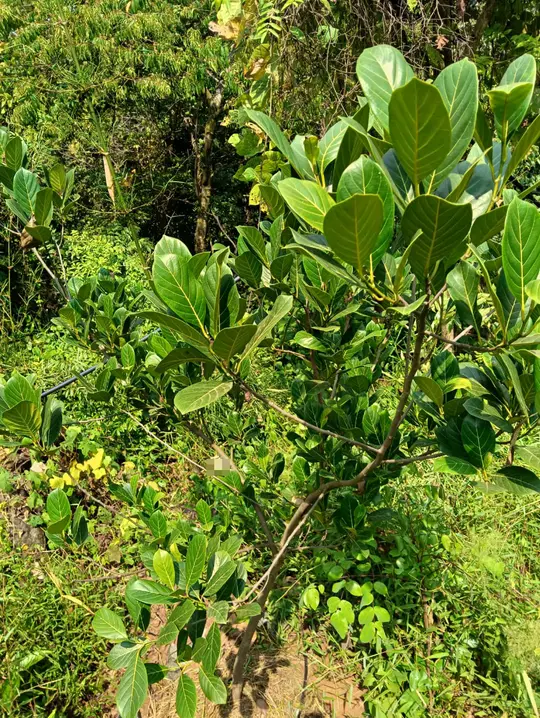
- Glossy, leathery, dark green leaves with a pale midrib. On young trees some leaves can be lobed.
- Worth knowing
- Jackfruit is the largest fruit borne on any tree: it can grow to about 90 cm long and weigh up to about 50 kg.
-
Breadfruit
Artocarpus altilis- Look for
- Huge, glossy leaves cut deeply into pointed lobes, with pale yellow veins.
- Worth knowing
- It is named for the cooked fruit, whose texture is often compared to freshly baked bread.
-
Mangosteen
Garcinia mangostana- Look for
- Thick, leathery leaves in opposite pairs, with a pale midrib. New leaves are rosy.
- Worth knowing
- Mangosteen grows very slowly: a tree raised from seed may fruit after 7 to 9 years, but often takes 10 years or more.
-
Jamun
Syzygium cumini- Look for
- Smooth, glossy leaves in opposite pairs, pinkish when young.
- Worth knowing
- Its sweet-sour, purple-black fruit is known for staining the tongue purple.
-
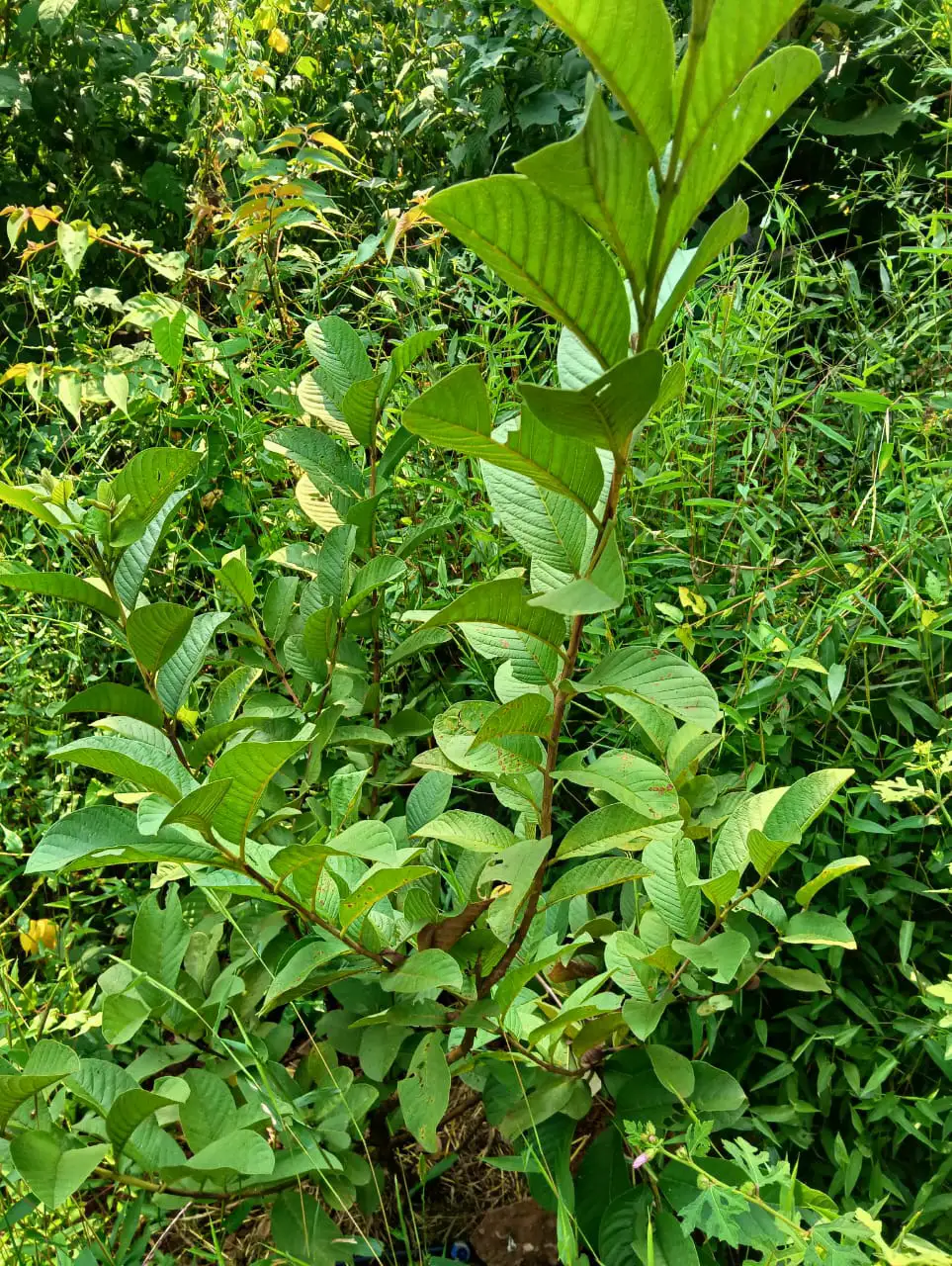
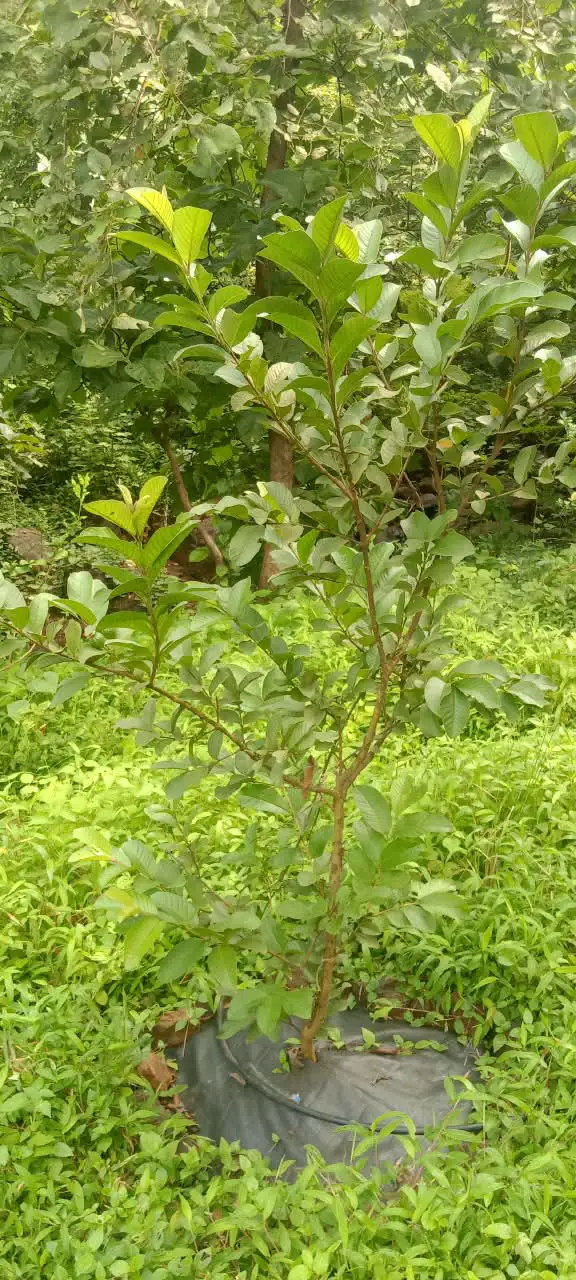
Guava
Psidium guajava- Look for
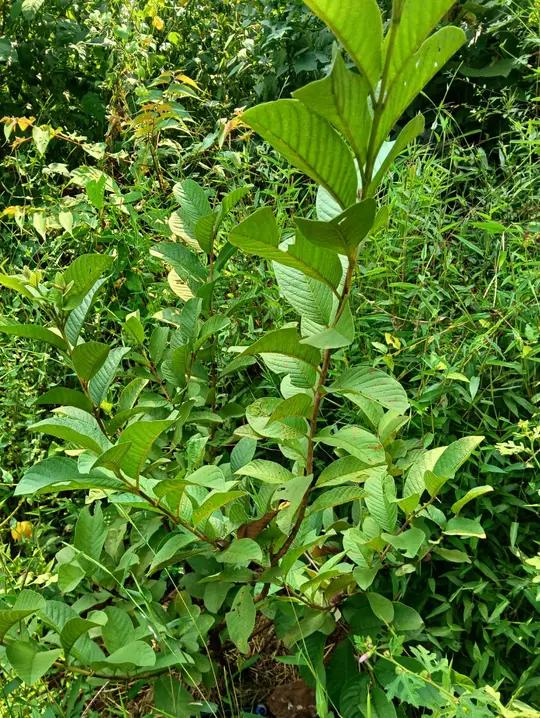
- Oval leaves in opposite pairs with deep, parallel side veins. They are fragrant when crushed.
- Worth knowing
- Guava comes from tropical America, and its fruit is very rich in vitamin C.
-
Avocado
Persea americana- Look for
- Glossy, leathery leaves, oval to lance-shaped, often reddish when young.
- Worth knowing
- Each avocado flower opens twice: first as a female flower, and later as a male one.
-
Sugar apple
custard apple, sitaphal Annona squamosa- Look for
- Thin, dull green leaves held singly along slightly zigzag twigs.
- Worth knowing
- It is thought to come from tropical America, despite its Indian name sitaphal.
-
Pomegranate
Punica granatum- Look for
- A bushy, often spiny shrub with small, narrow, glossy leaves.
- Worth knowing
- Botanically the fruit is a berry, packed with hundreds of seeds, each in its own juicy coat.
-
Amla
Indian gooseberry Phyllanthus emblica- Look for
- Feathery sprays of tiny, narrow leaves set in two neat rows.
- Worth knowing
- Its round, very sour fruit is eaten fresh, pickled or preserved.
-
Bael
Aegle marmelos- Look for
- A thorny tree whose leaves mostly come in threes.
- Worth knowing
- Bael leaves are offered to Lord Shiva, and the hard-shelled fruit takes 10 to 11 months to ripen.
-
Cocoa
Theobroma cacao- Look for
- Large, simple leaves. At about a metre or so the young stem stops and fans out into three to five side branches.
- Worth knowing
- Cocoa flowers and pods grow straight out of the trunk and older branches.
-
Moringa
drumstick tree Moringa oleifera- Look for
- A fast, slender tree with soft, feathery leaves divided into many small oval leaflets.
- Worth knowing
- The long green pods, the drumsticks, are cooked as a vegetable, and so are the leaves and flowers.
Photographs
-
MangoCoppery new leaves crown a young tree on its bed of straw mulch. 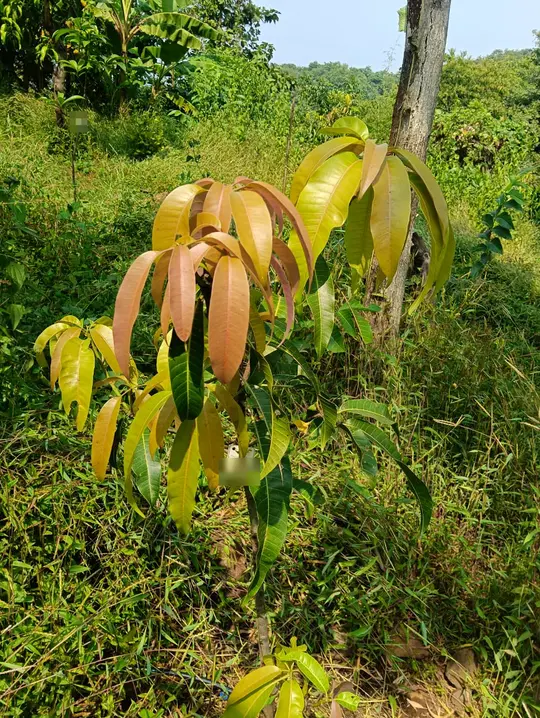
MangoA flush of coppery-pink new leaves with the hills behind. 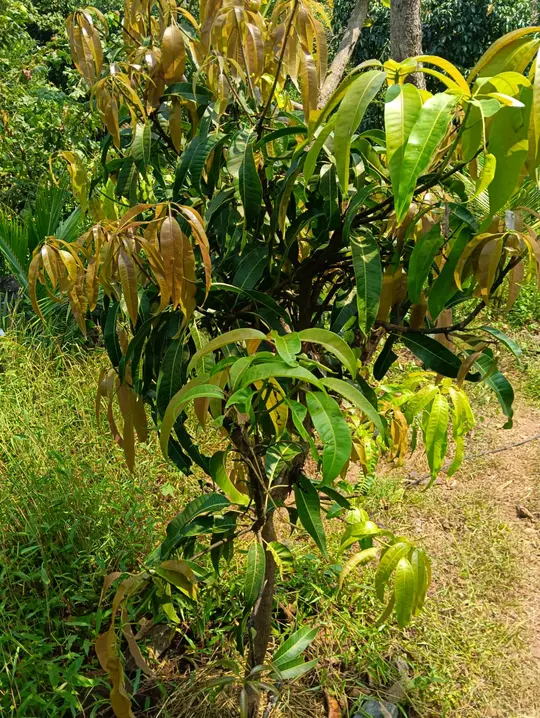
MangoCoppery new leaves flushing on a young tree. 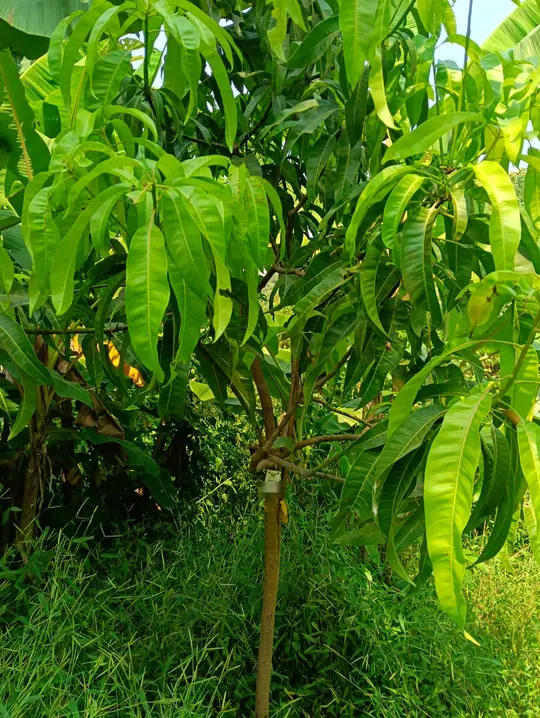
Tag number 258MangoTree number 258, flush with fresh green leaves. 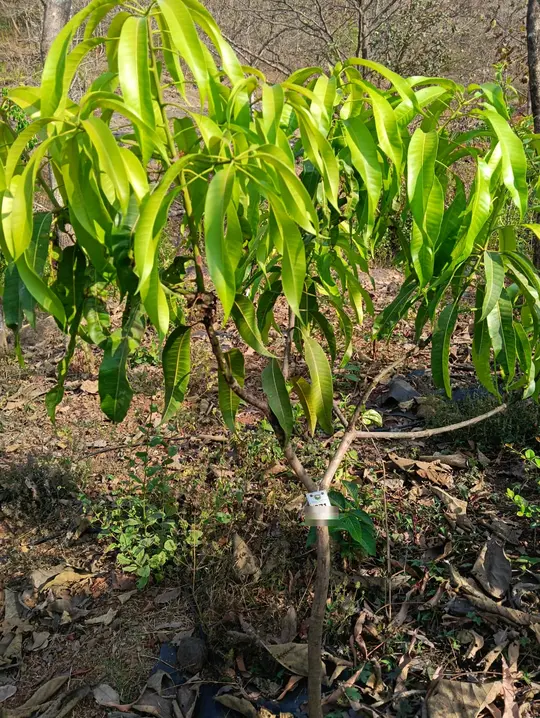
Tag number 271MangoTree number 271 in fresh leaf during the dry season. 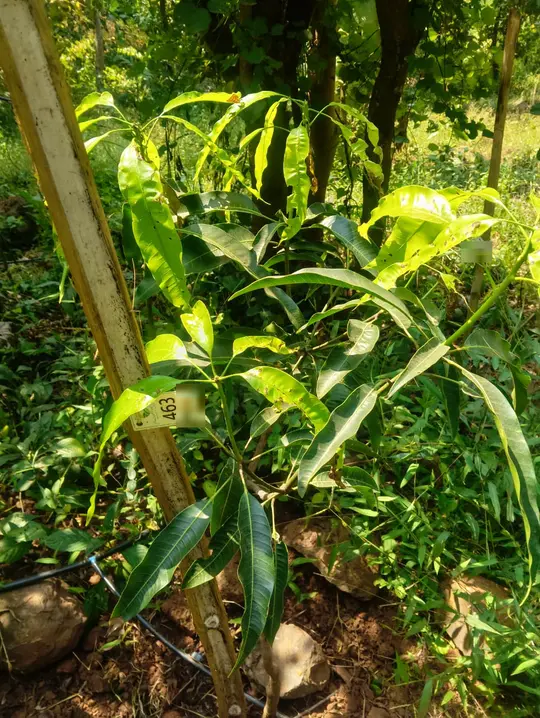
Tag number 463MangoTree number 463, staked and ringed with stones. 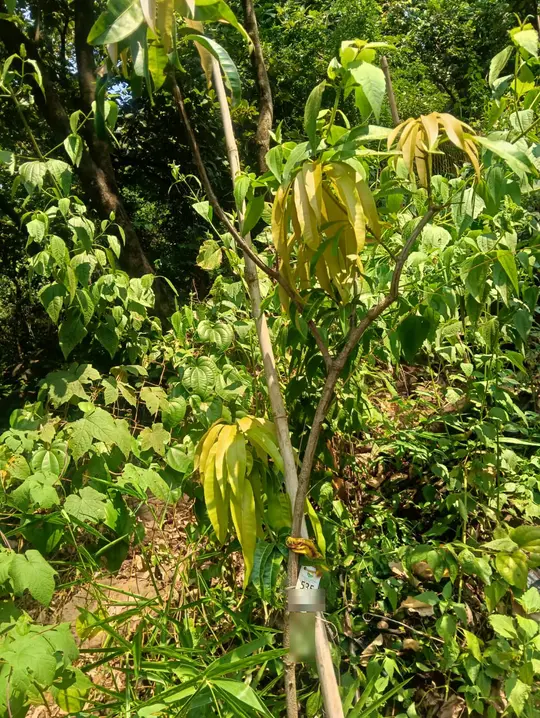
Tag number 535MangoFresh pale new leaves on tree number 535. 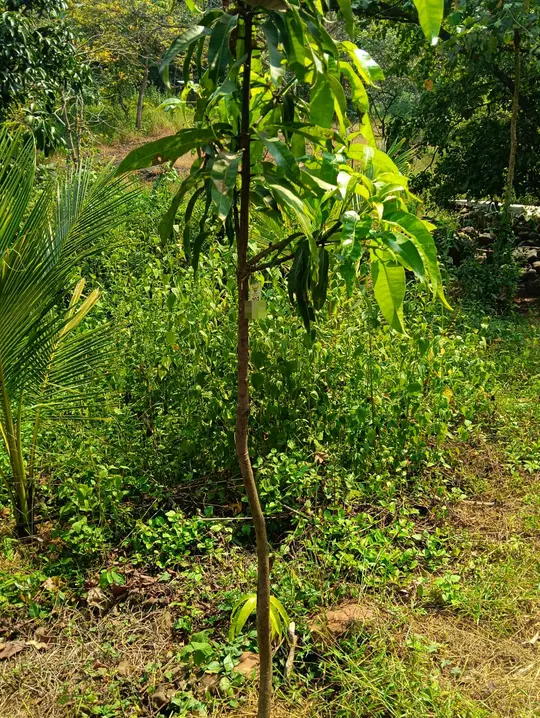
Tag number 293MangoTree number 293 reaching for the sun. 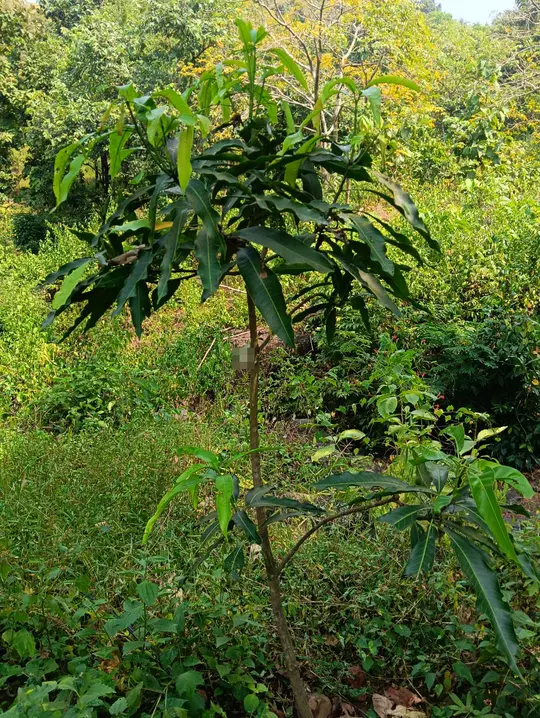
Tag number 289MangoA young tree stretching up against the forest backdrop. 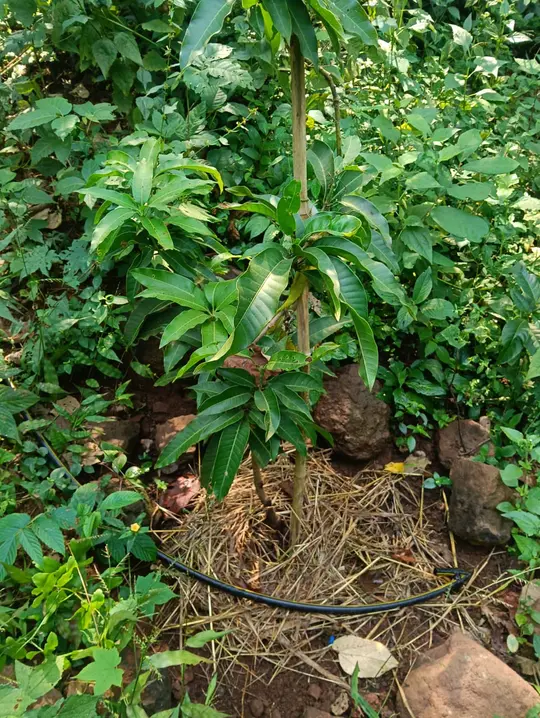
MangoStaked, mulched and watered drop by drop. 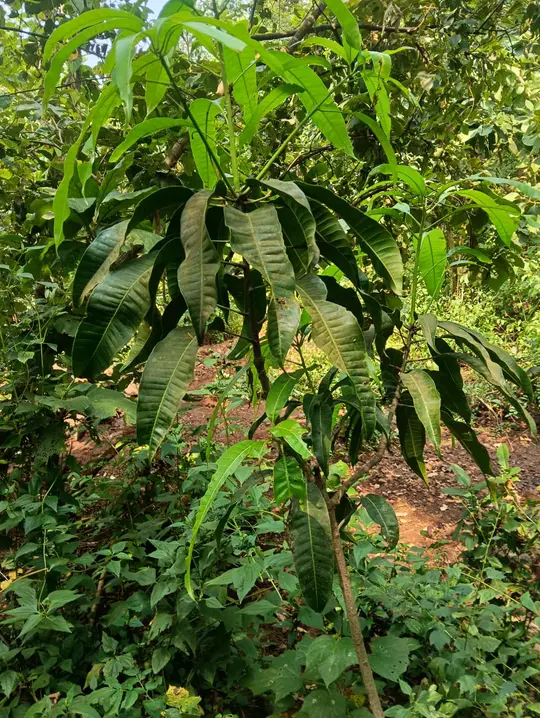
MangoLong leaves catching the light at the forest edge. 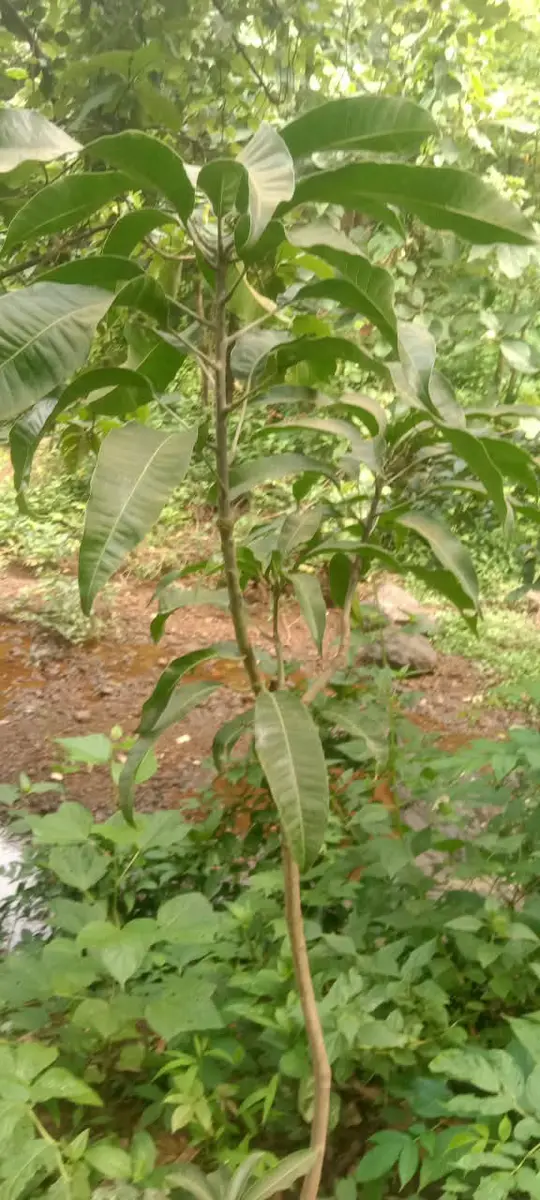
MangoLong, wavy leaves on a sapling beside the rain-soaked track. -
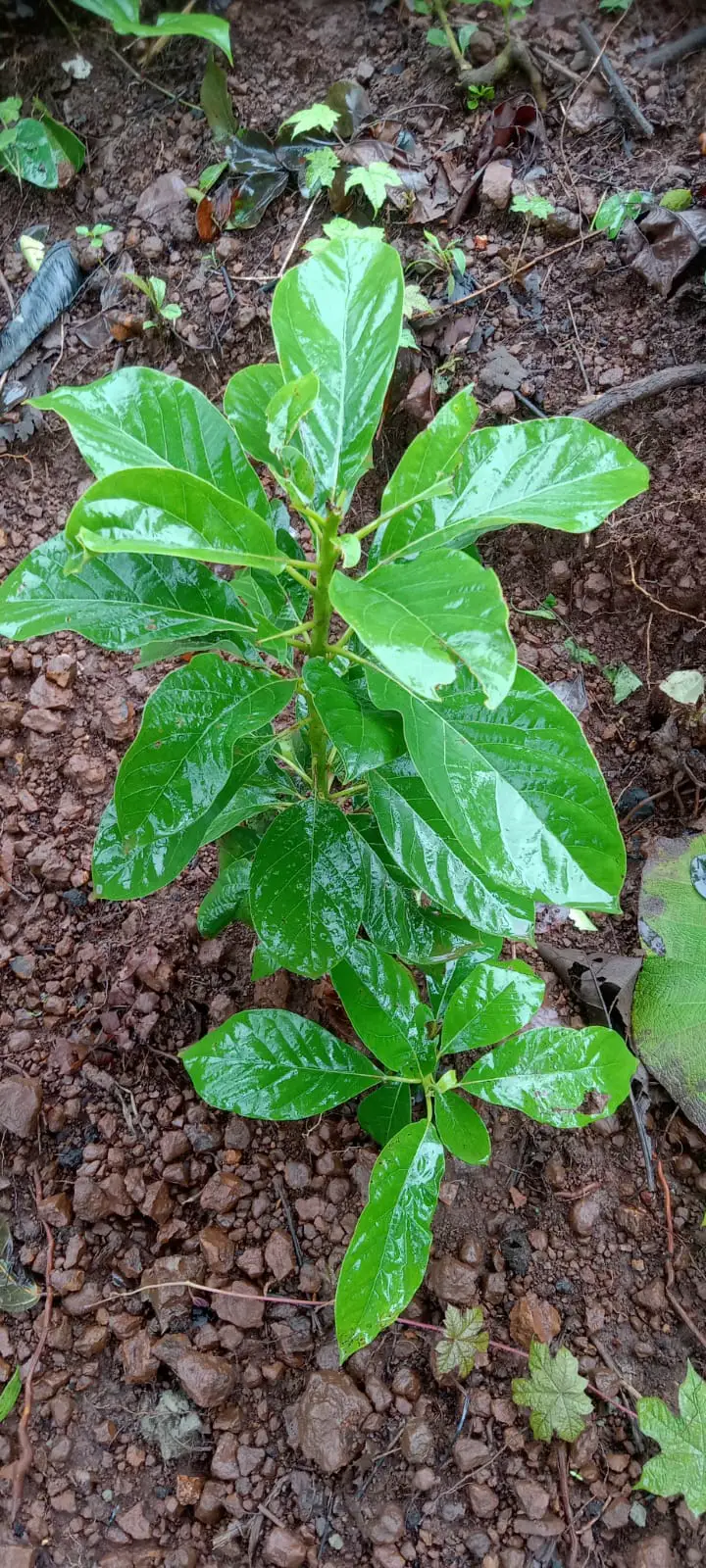
JackfruitGlossy leaves on a young tree at the forest edge. 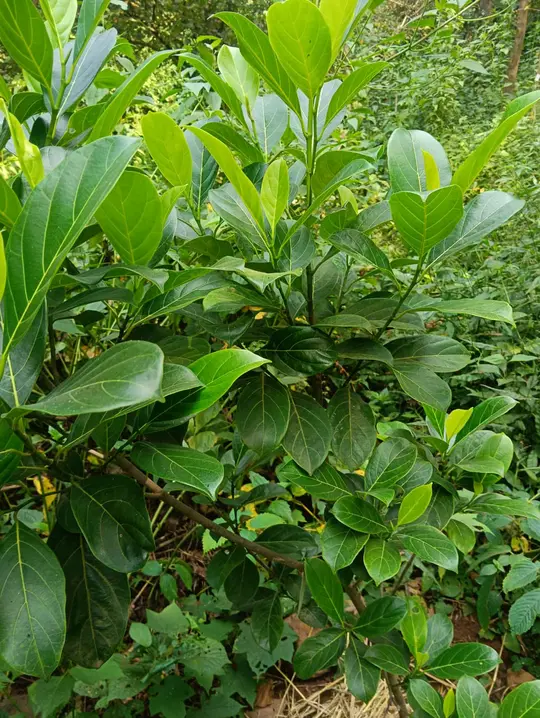
JackfruitFresh pale-green growth on a thriving young tree. -
GuavaA bushy young tree thriving on straw mulch and drip irrigation. 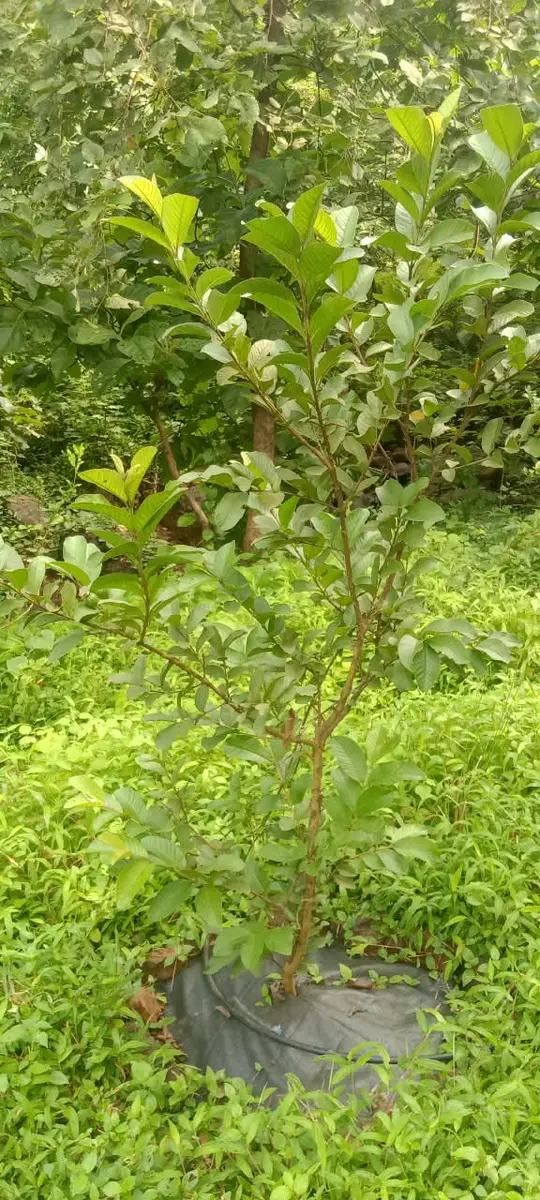
GuavaA young tree standing tall in the monsoon grass.
Citrus
-
Lemon
Lemon or lime: in India the name nimbu is used for both.- Look for
- Glossy leaves that smell of citrus when crushed, on twigs that are often thorny.
-
Pomelo
Citrus maxima- Look for
- Large, leathery leaves on a leaf stalk with a broad wing.
- Worth knowing
- The pomelo is the largest citrus fruit, and an ancestor of the grapefruit.
Palms
-
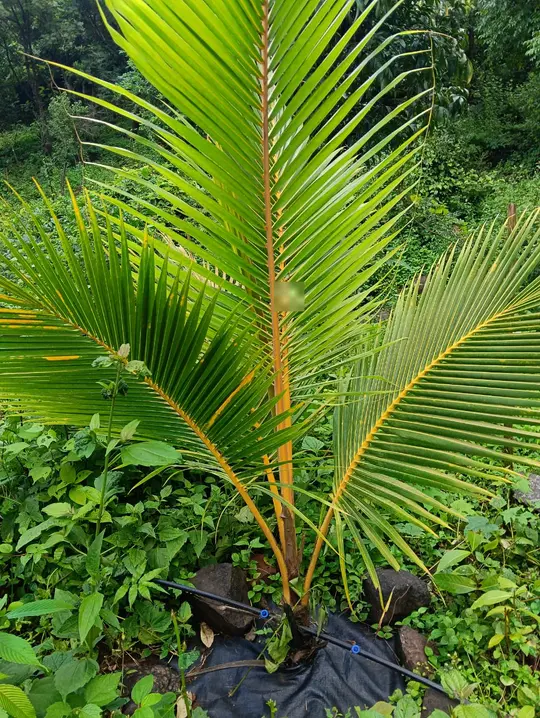
Coconut
Cocos nucifera- Look for
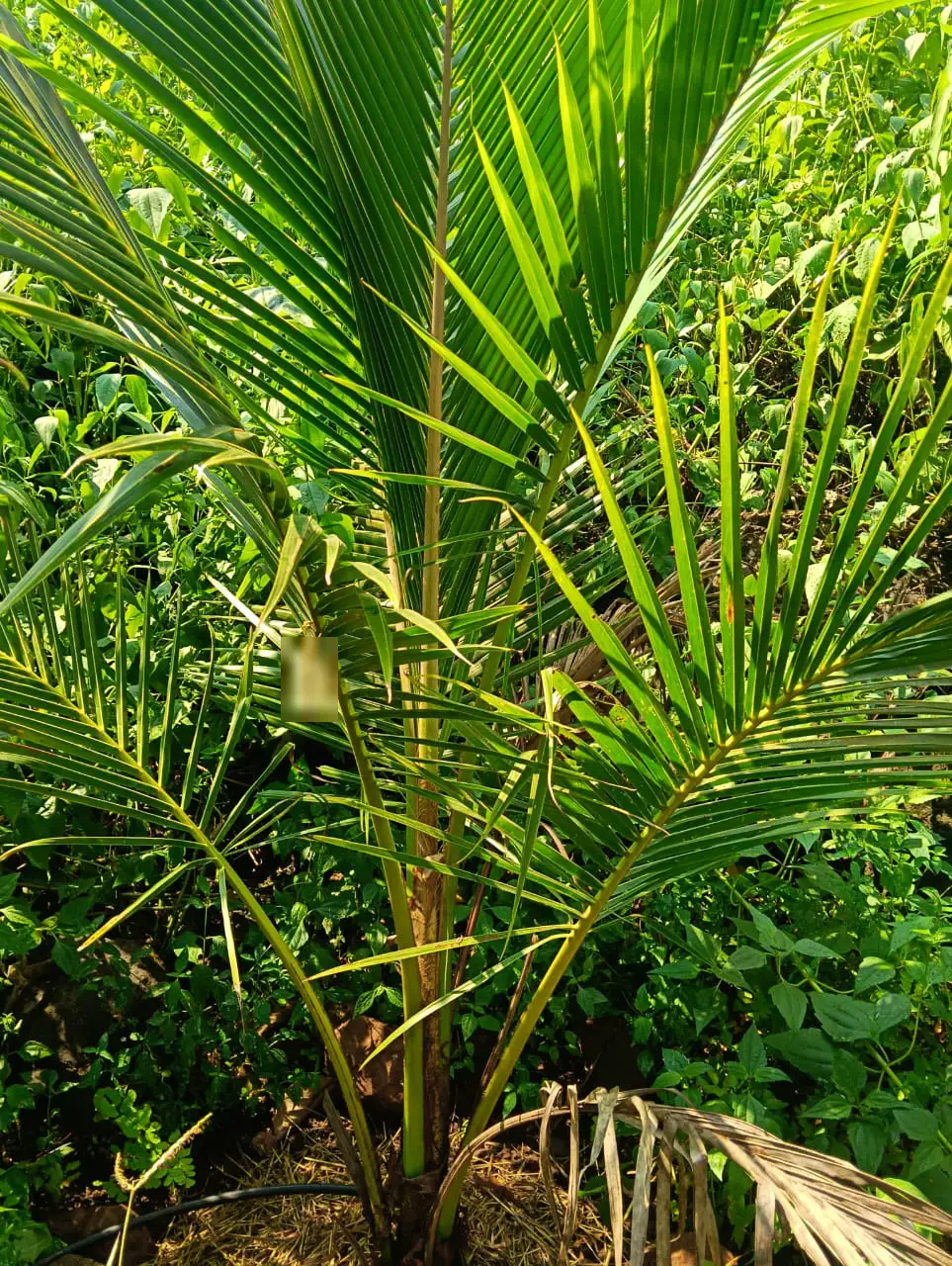
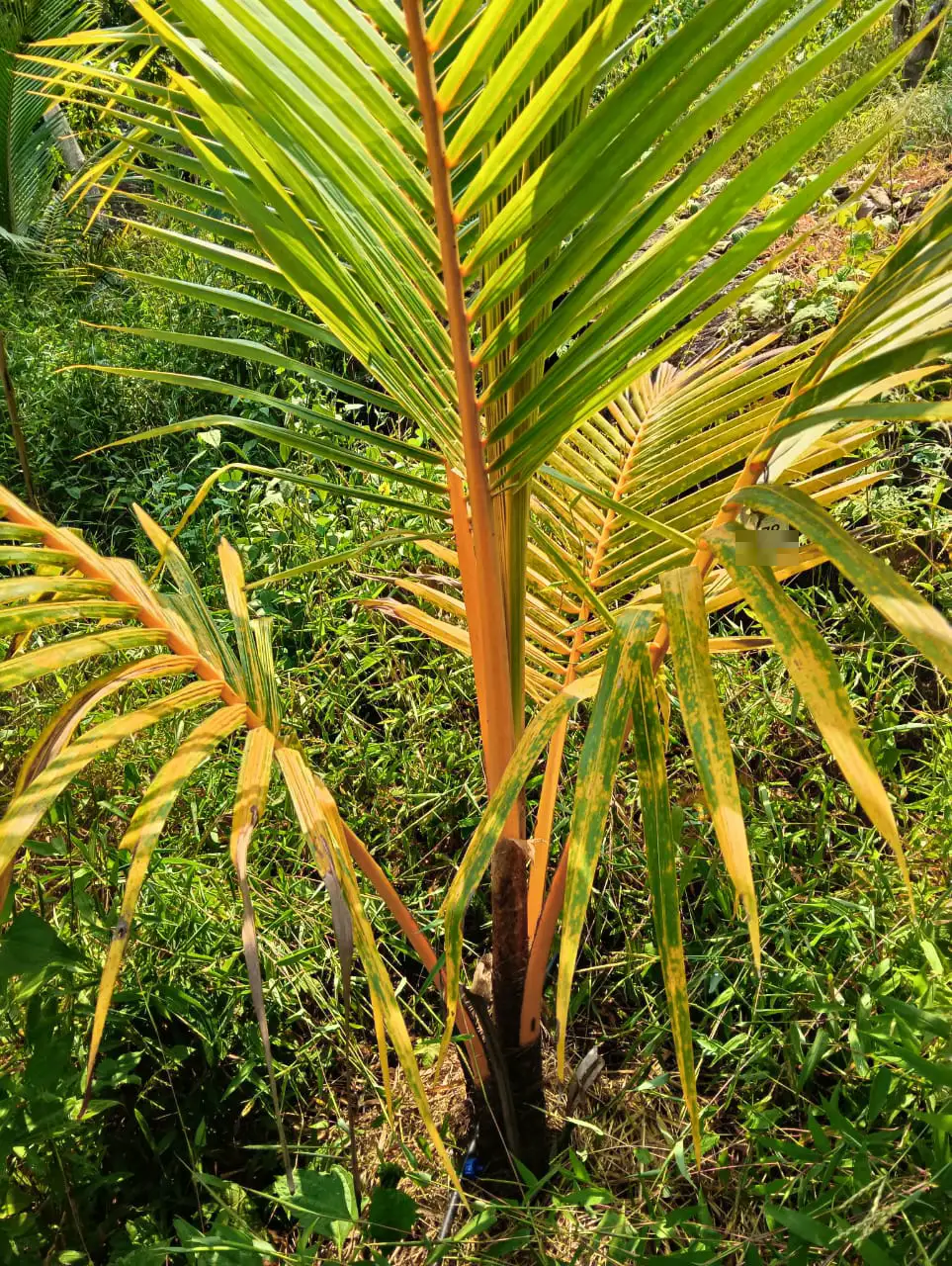
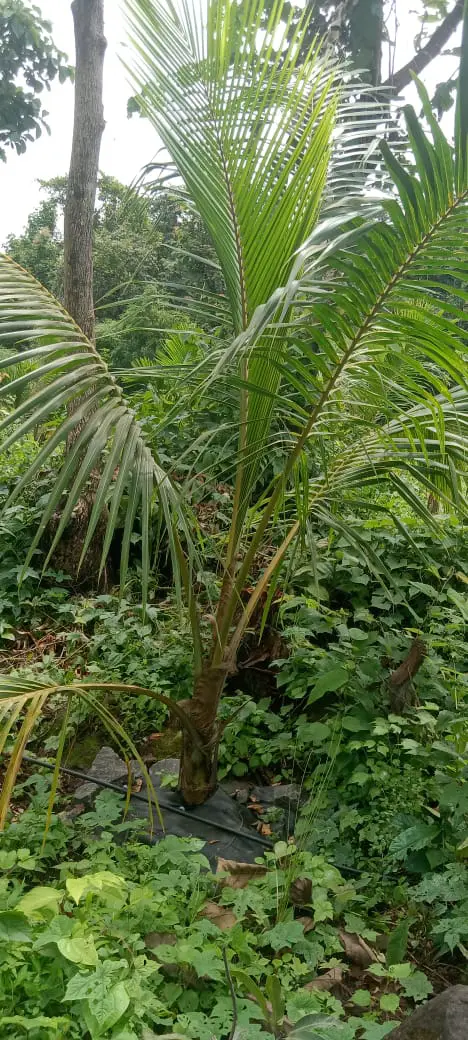
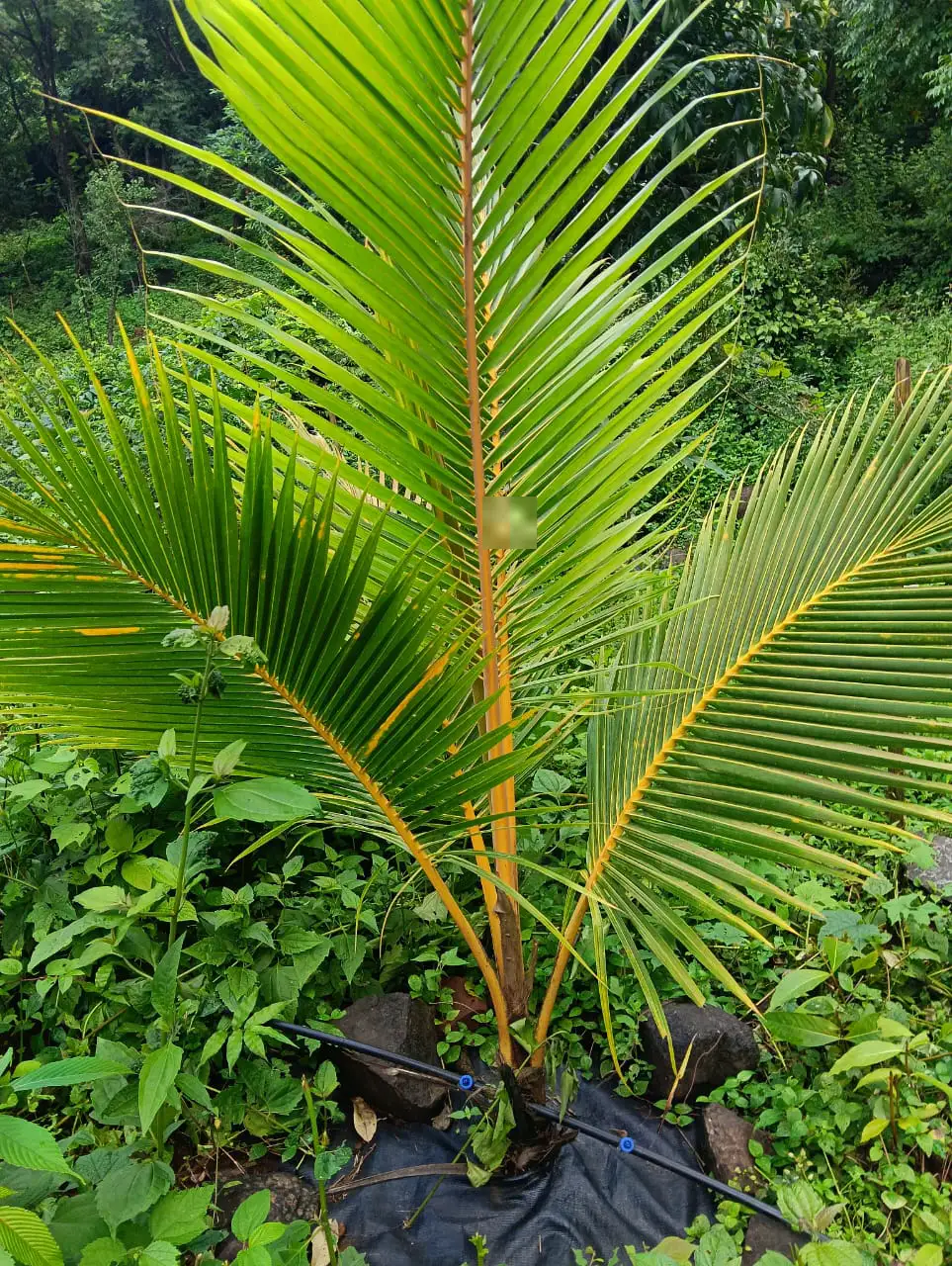
- Feather-shaped fronds. A young palm grows straight out of the whole nut, still in its husk, which stays at its base.
- Worth knowing
- On Narali Poornima, around the end of the monsoon, coconuts are offered to the sea. Naral is the Marathi word for coconut.
-
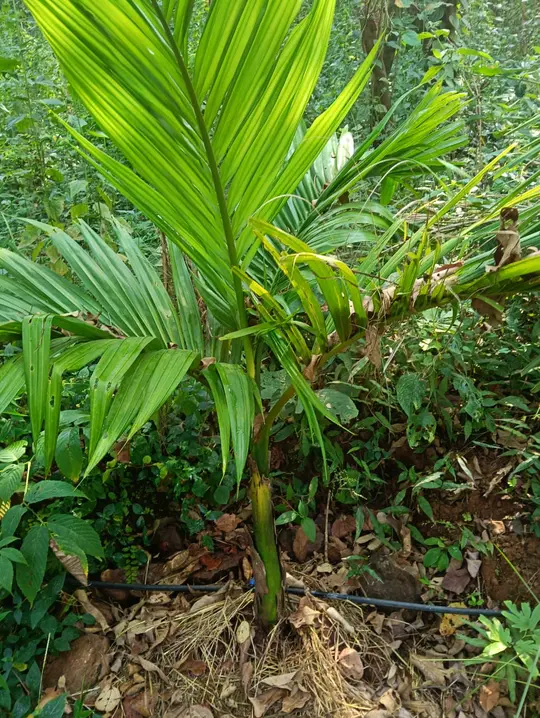
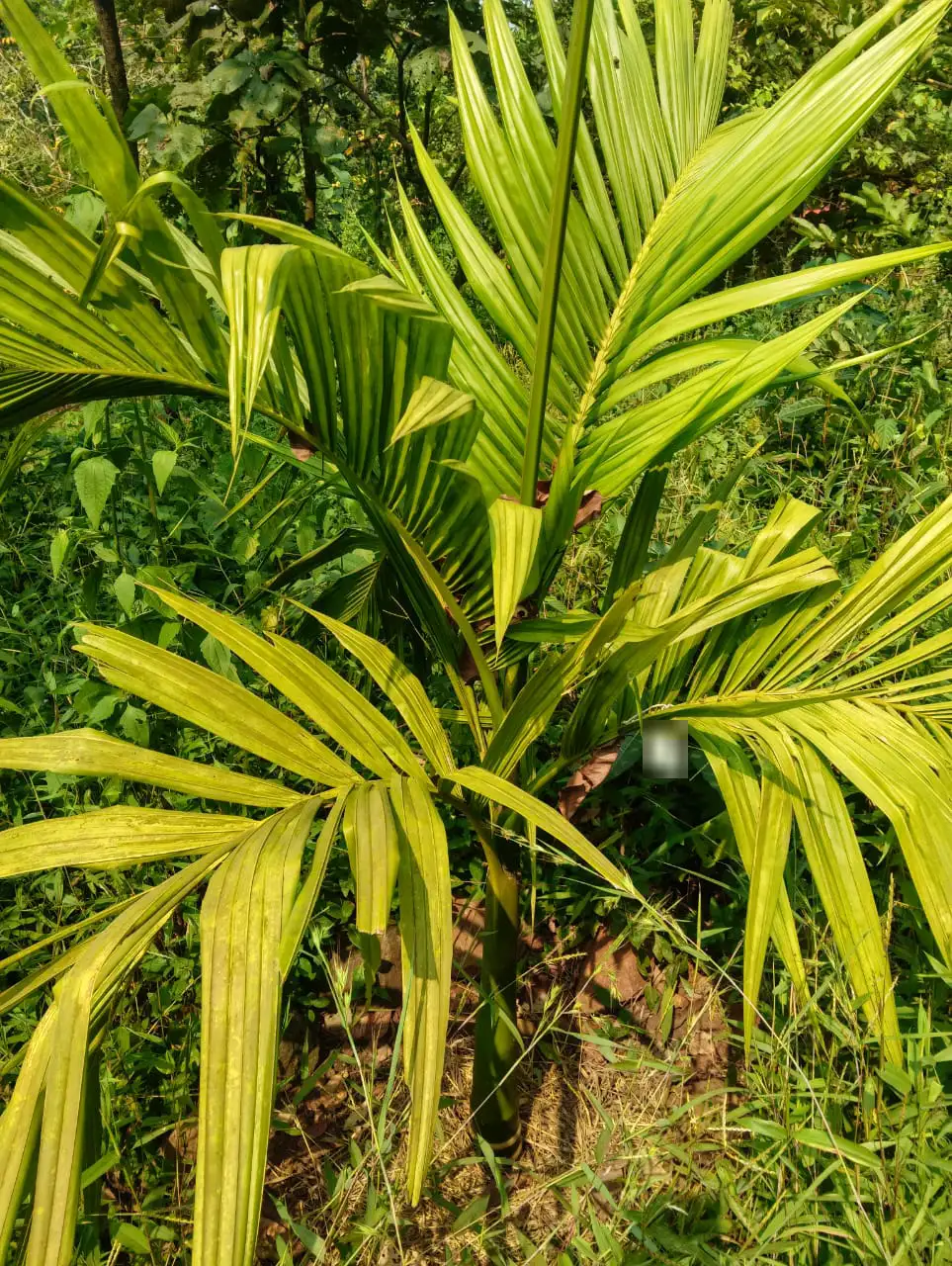
Arecanut
supari Areca catechu- Look for
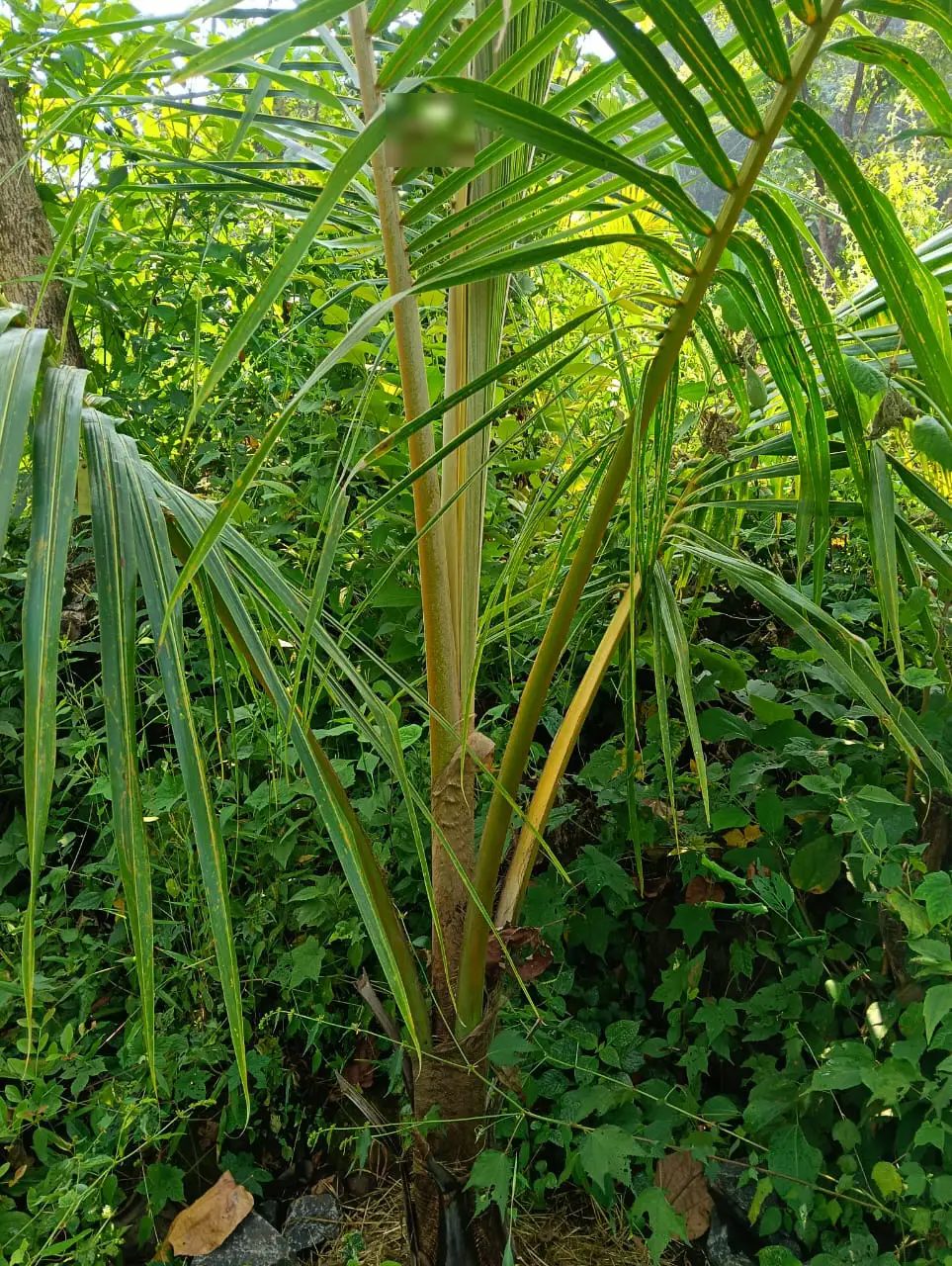
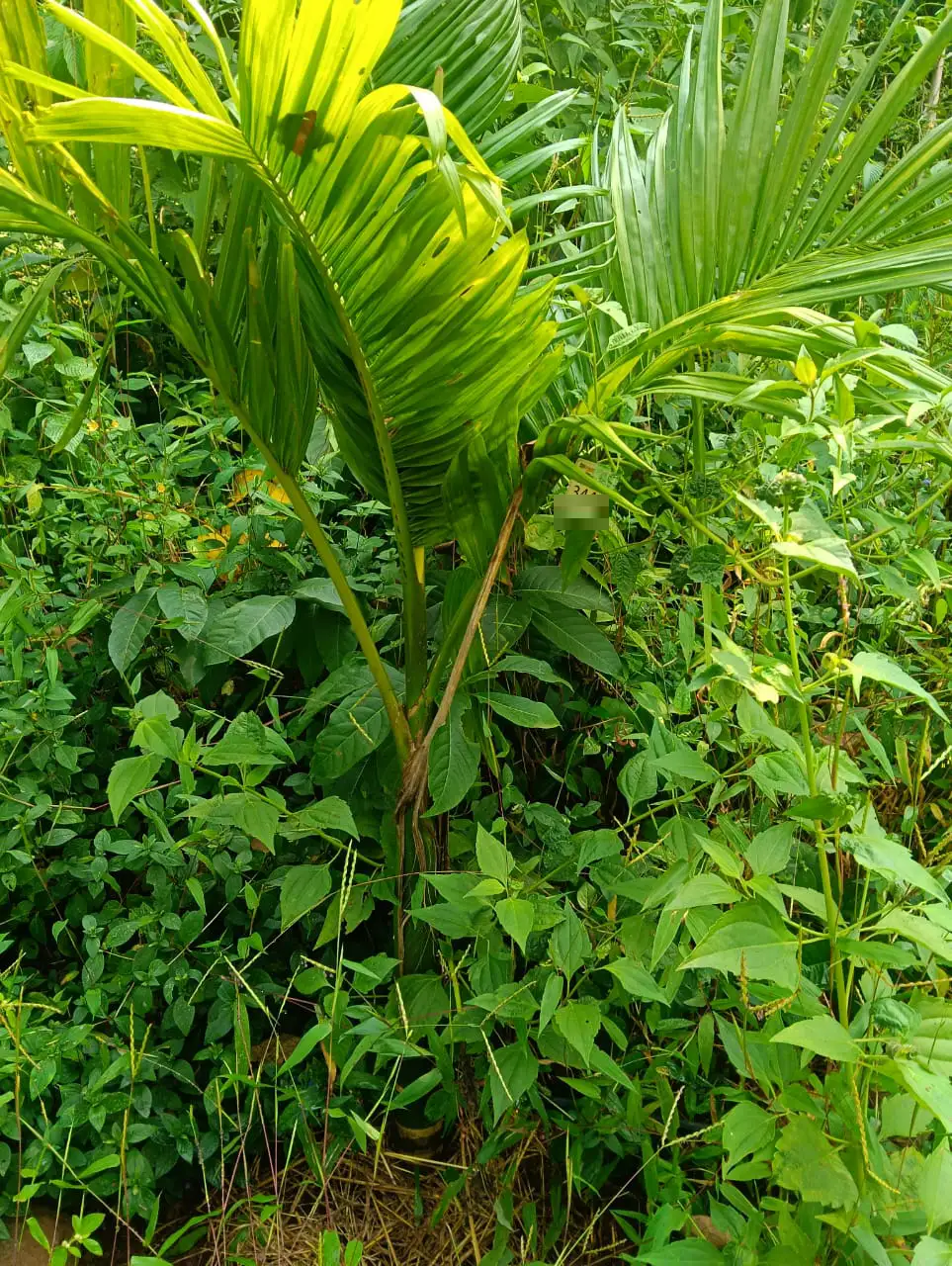
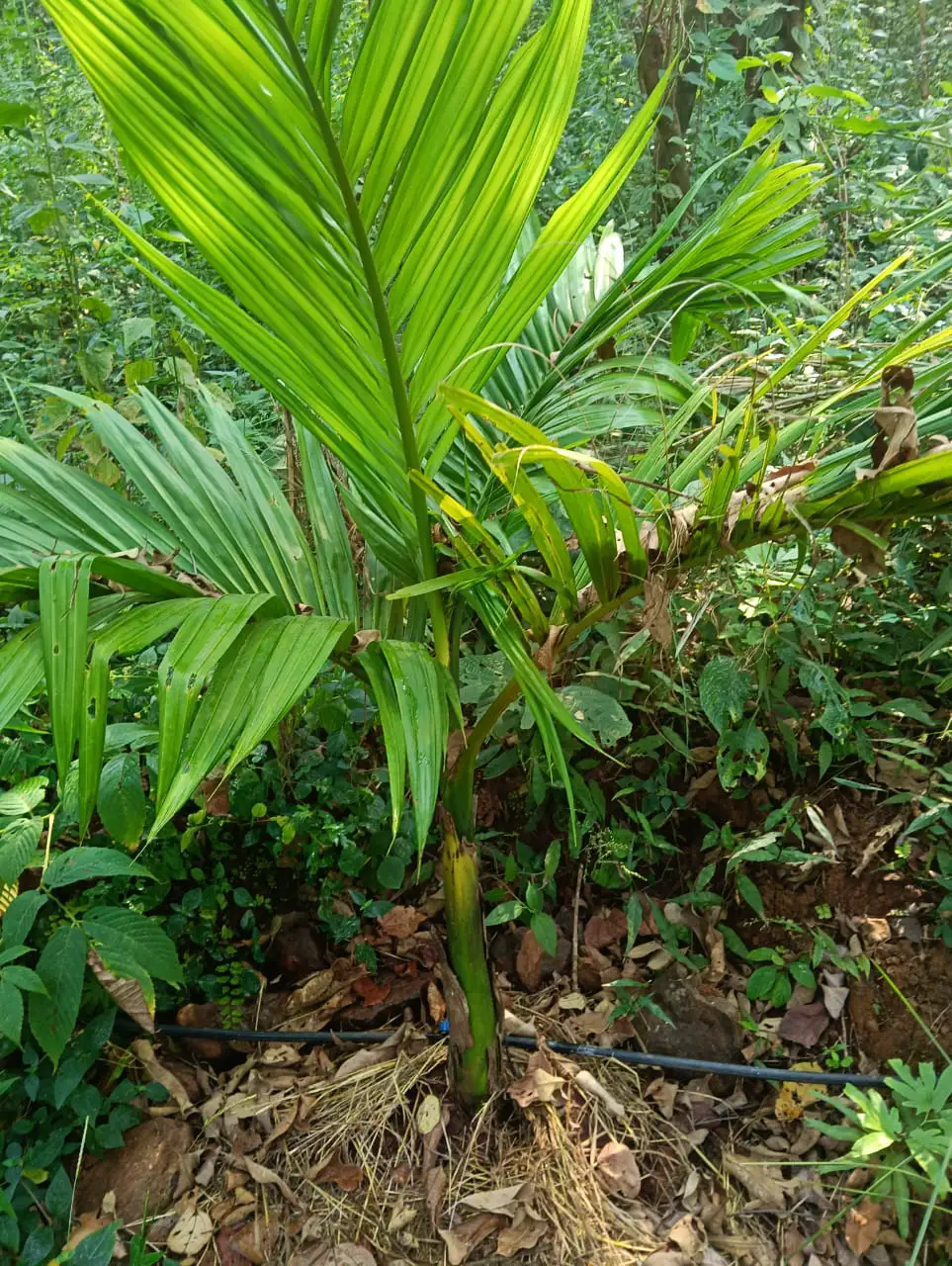
- A single slender, ringed stem that never forms a clump, topped by a crown of long feathery leaves.
- Worth knowing
- The arecanut is not a true nut but the seed of the palm fruit.
Photographs
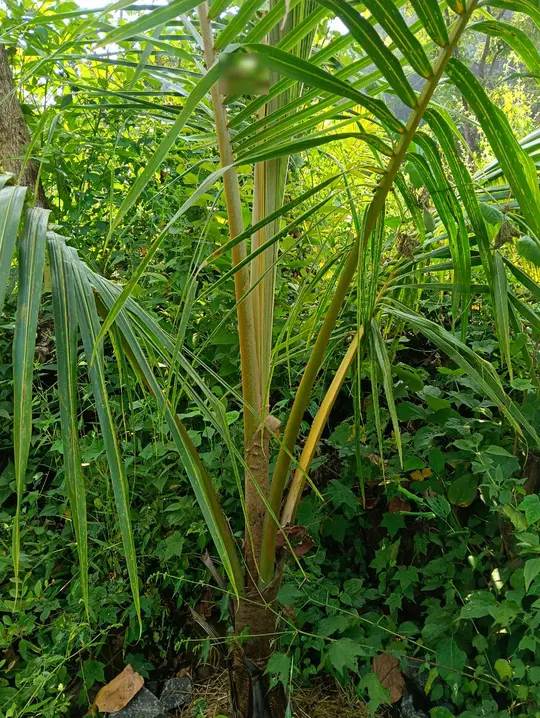
CoconutLong fronds rising from a fibrous base ringed with stones and straw. 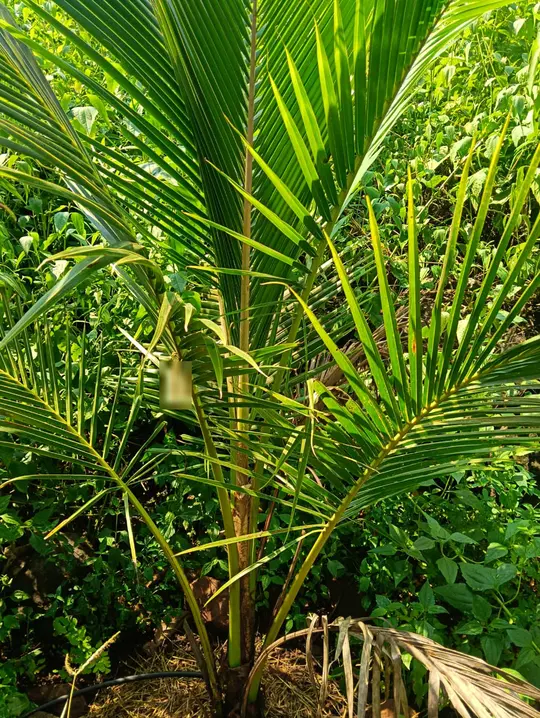
Tag number 283CoconutA tagged young palm spreading its fronds over the mulch. 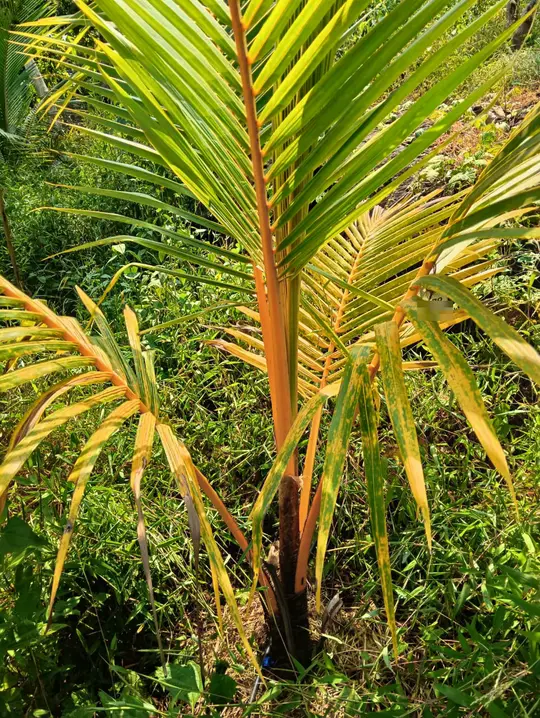
Tag number 278CoconutBright orange stalks make this young palm hard to miss. 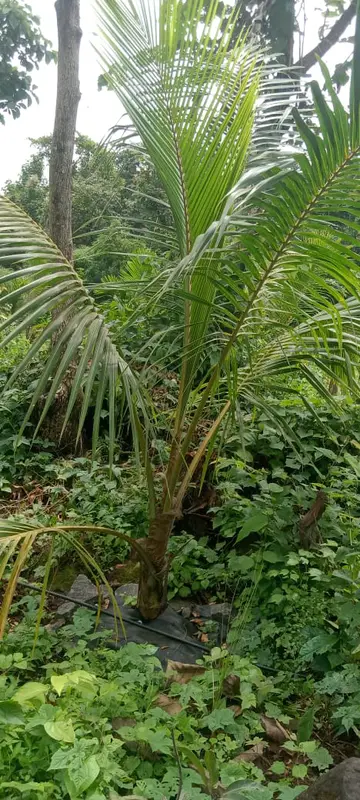
CoconutFeathery fronds arching over the forest floor. -
CoconutA young palm spreading its fronds amid monsoon green. 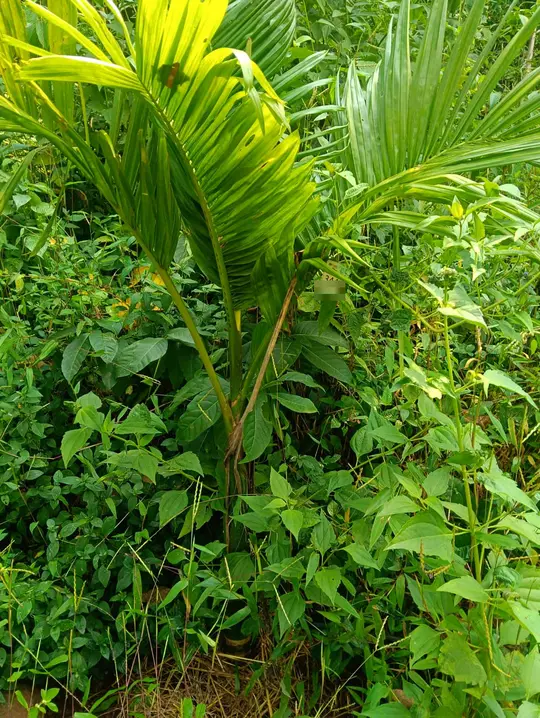
Tag number 344ArecanutPalm no. 344 standing tall among the greenery. -
ArecanutA young palm settles in with drip irrigation and straw mulch. 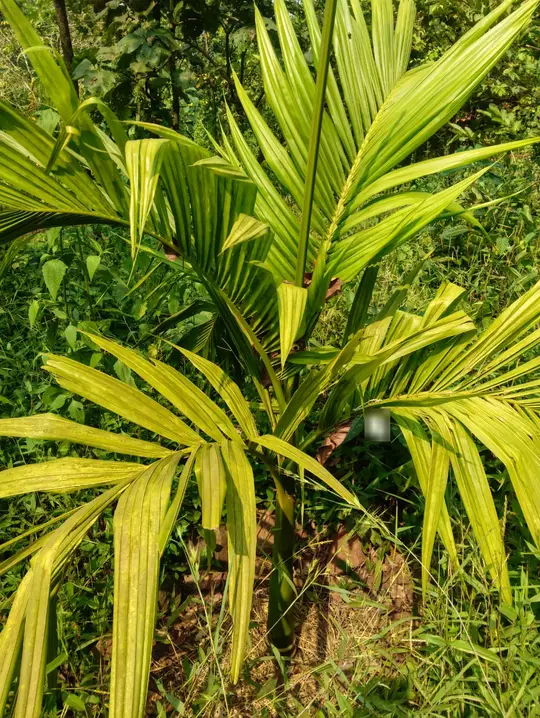
ArecanutSunlight on the fronds of a young palm.
Other plants on the list
-
Black pepper
Piper nigrum- Look for
- A climbing vine with swollen joints that grip a support tree with small roots, and glossy, pointed oval leaves.
- Worth knowing
- Black, green and white pepper all come from this one vine.
-
Banana
Musa- Look for
- Huge, soft leaves rising from a trunk that is really tightly wrapped leaf sheaths.
- Worth knowing
- A banana plant is a giant herb, not a tree, and each stem fruits only once.
-
Blueberry
Which blueberry grows here is not yet recorded.- Look for
- A twiggy, many-stemmed bush with small, simple leaves.
- Worth knowing
- Blueberries come from North America and need acid soil; warm places grow low-chill varieties.
-
Blackberry
Which blackberry grows here is not yet recorded. -
Giant bamboo
Listed by the farm as gigantus bamboo. The exact species is not yet recorded.- Look for
- Tall, jointed canes growing in a tight clump.
- Worth knowing
- Bamboo is a grass, not a tree.
Also growing
The list of plants ends with the words and many more. These are plants in the photographs that are not on the named list, or that have not been named yet.
-
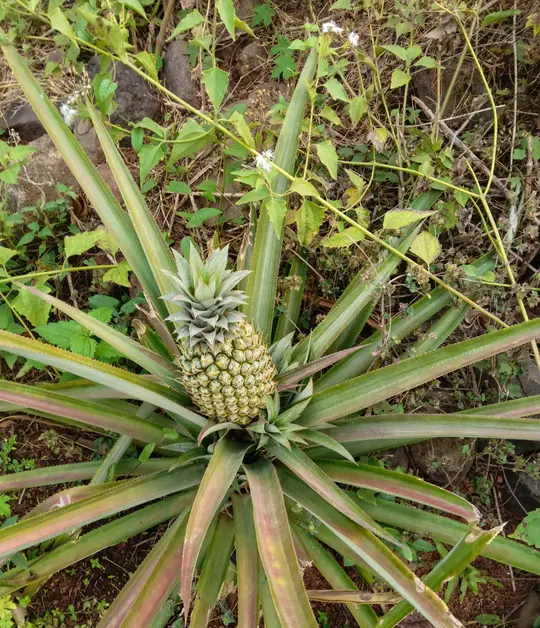
Pineapple
Ananas comosus- Look for
- A rosette of stiff, spiny, strap-shaped leaves at ground level; the fruit appears later on a stalk rising from the centre.
- Worth knowing
- Each pineapple is many fruits fused into one, formed from up to about 200 flowers.
Photographs, named and not yet named
-
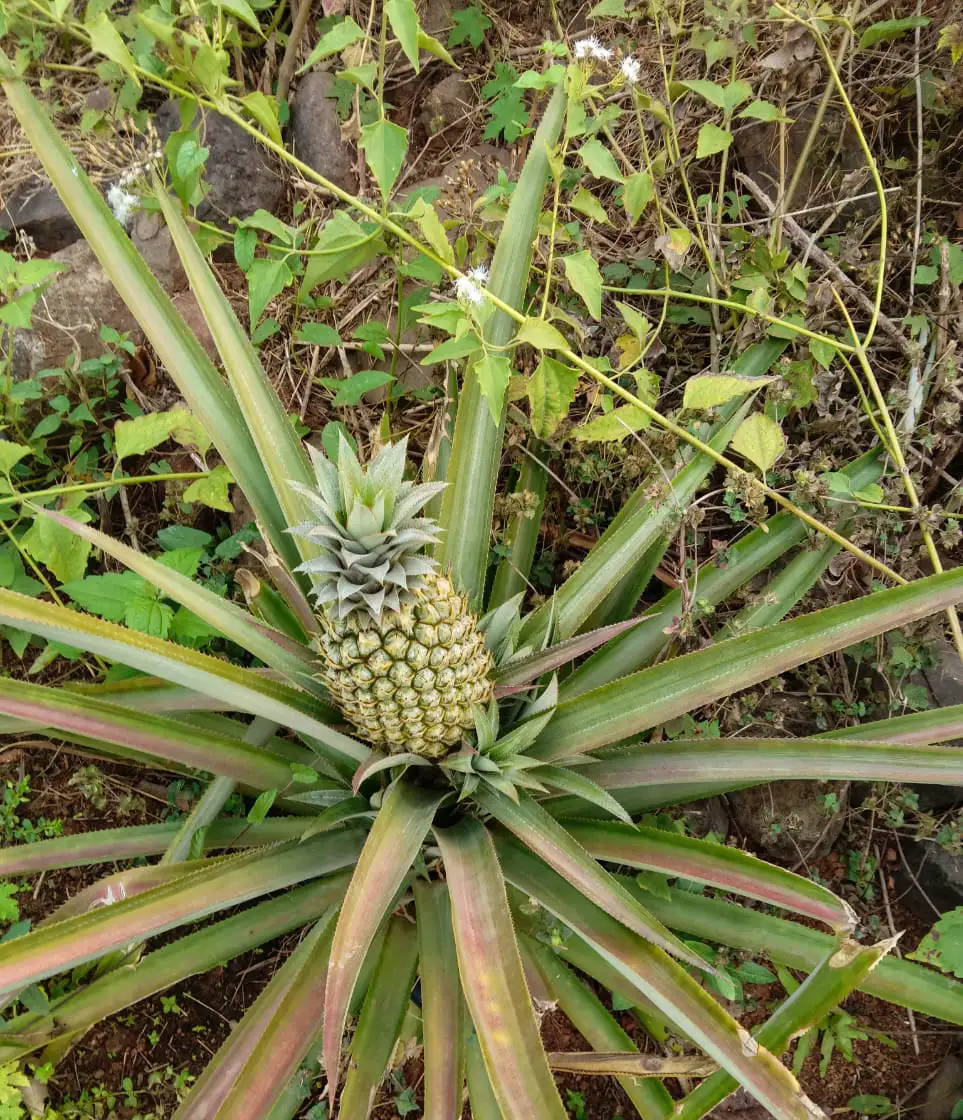
PineappleA fruit ripening at the heart of its spiky rosette. 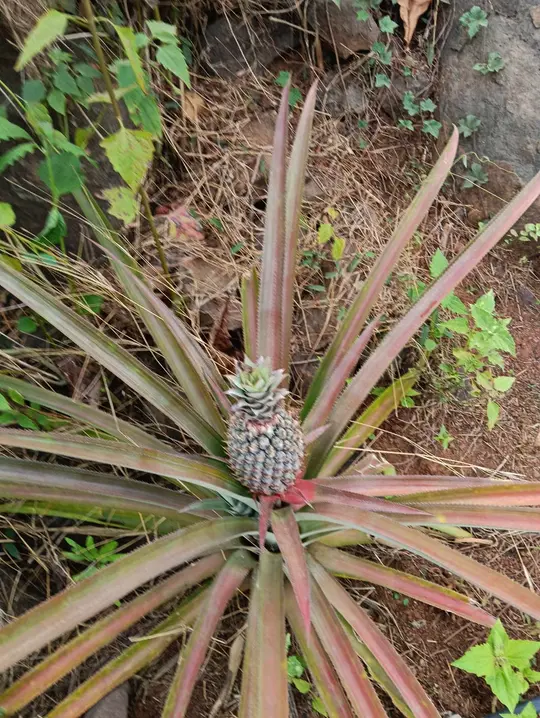
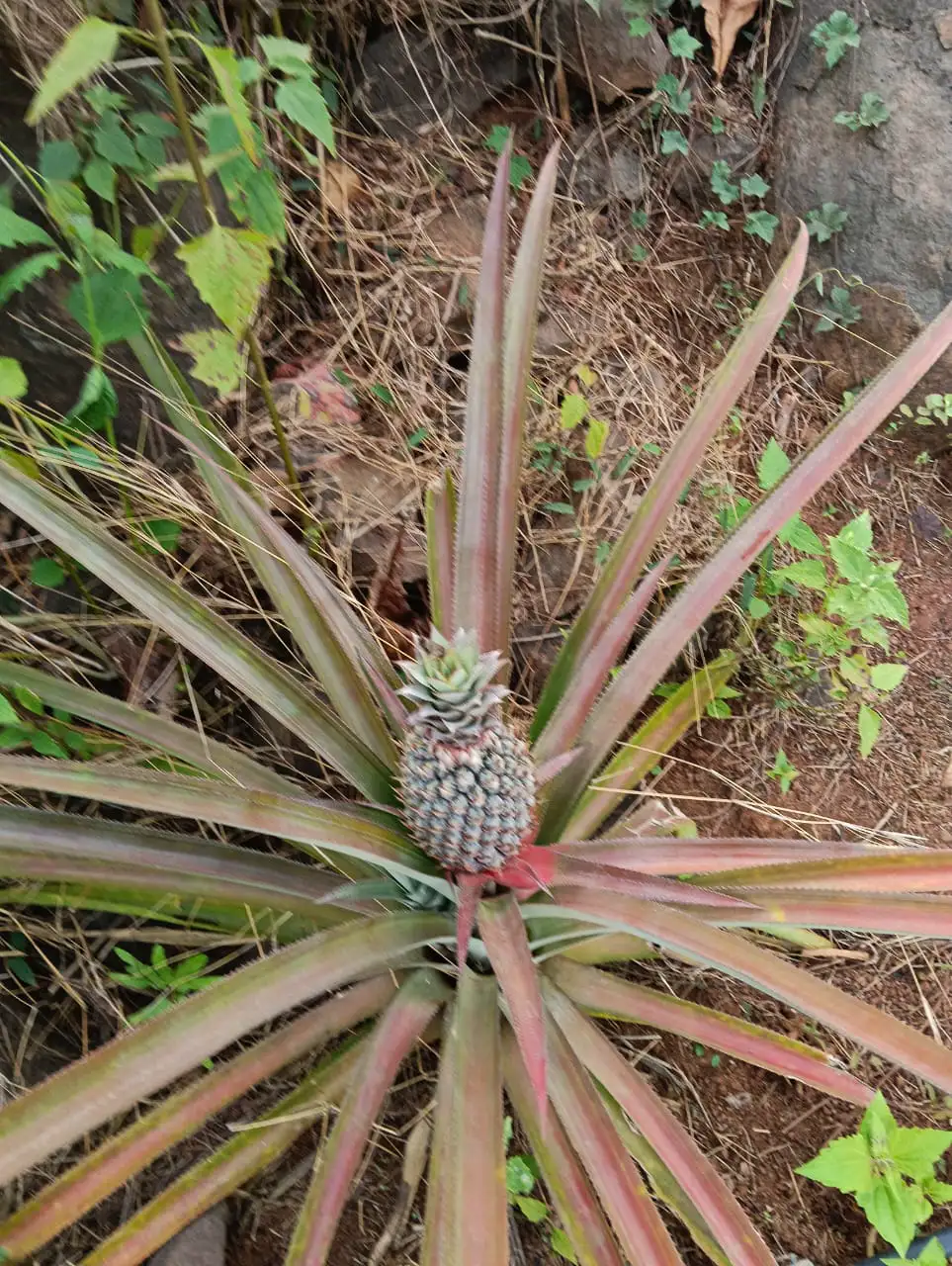
PineappleA small fruit forming among rosy, spiky leaves. 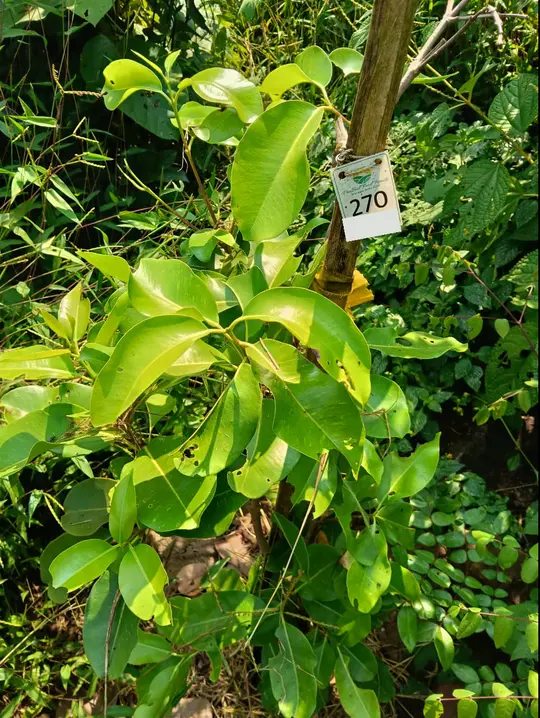
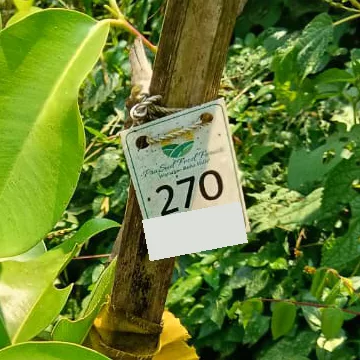
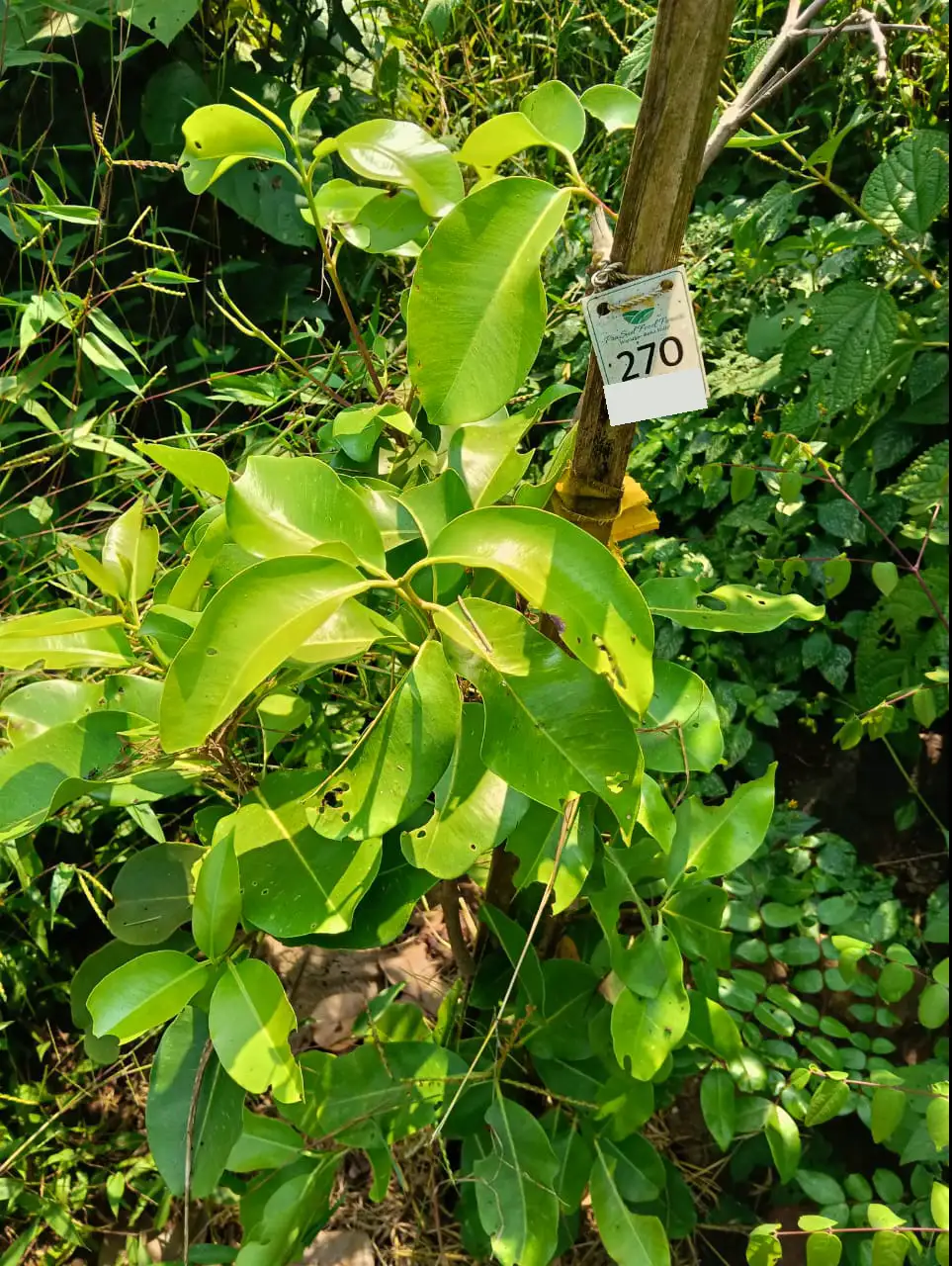
Tag number 270Tree number 270, glossy and green beside its stake. 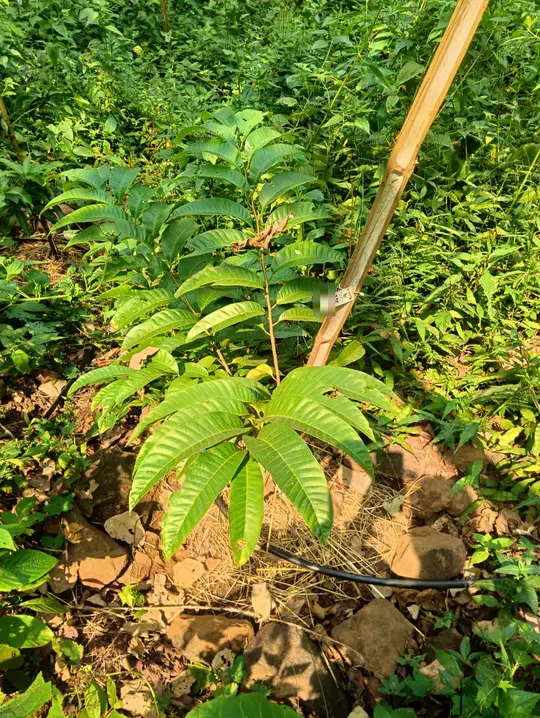
Tag number 376Tree no. 376: mulched, staked and ringed with stones. 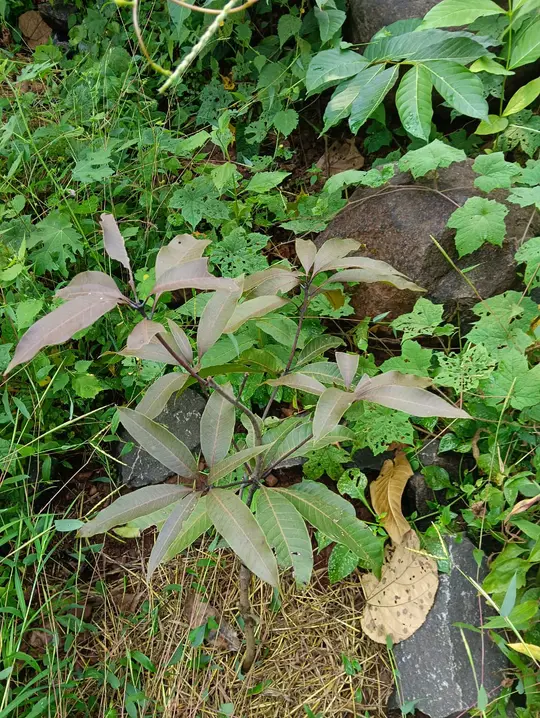
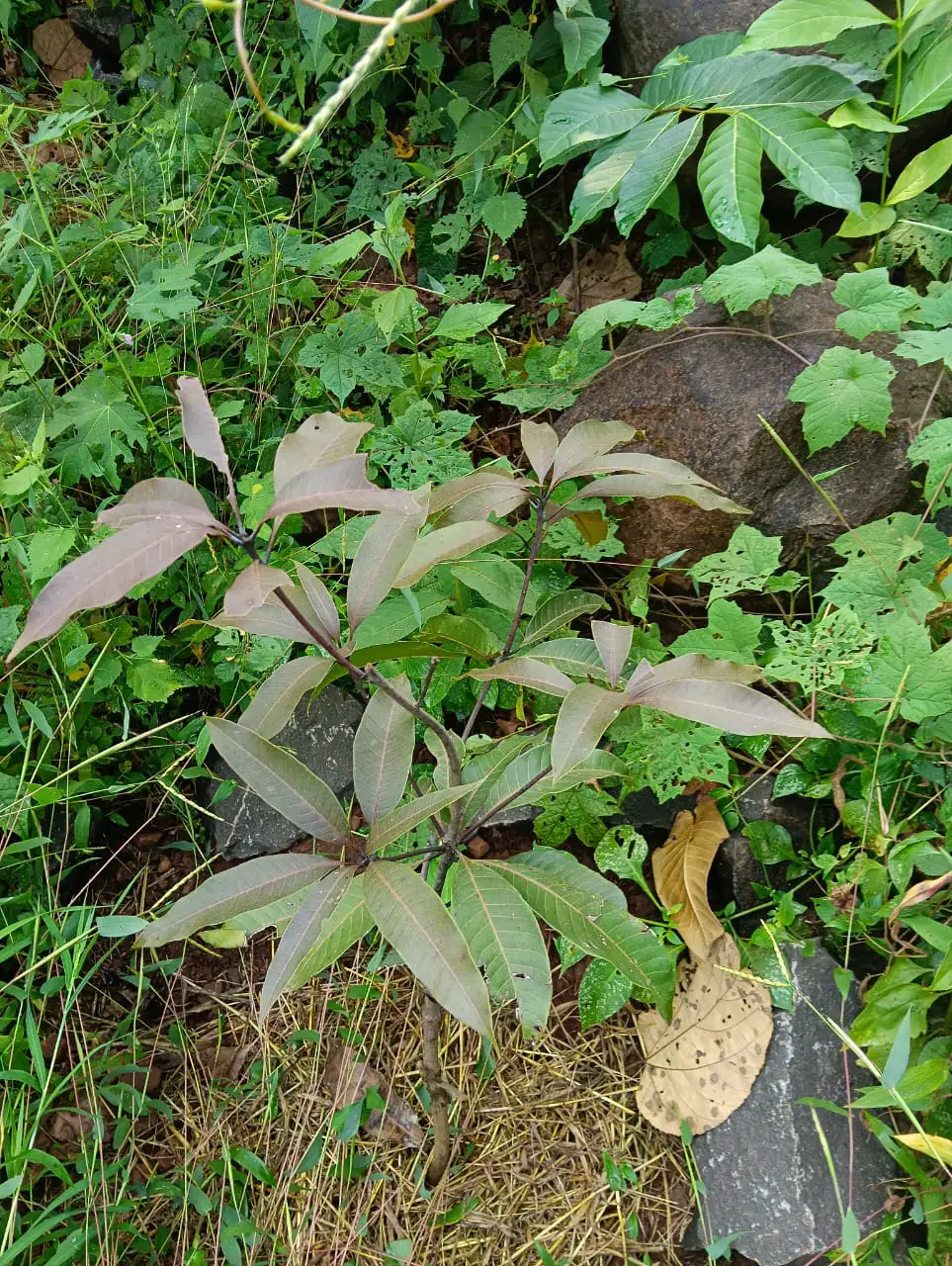
A young sapling dressed in dusky purple-bronze leaves. 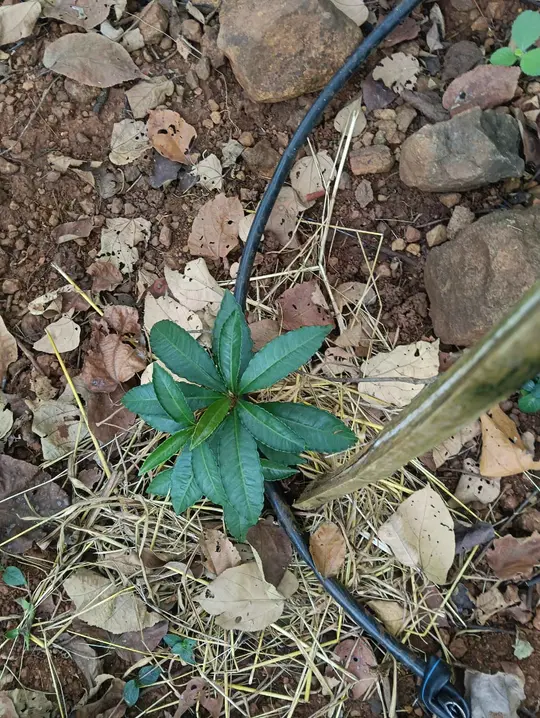
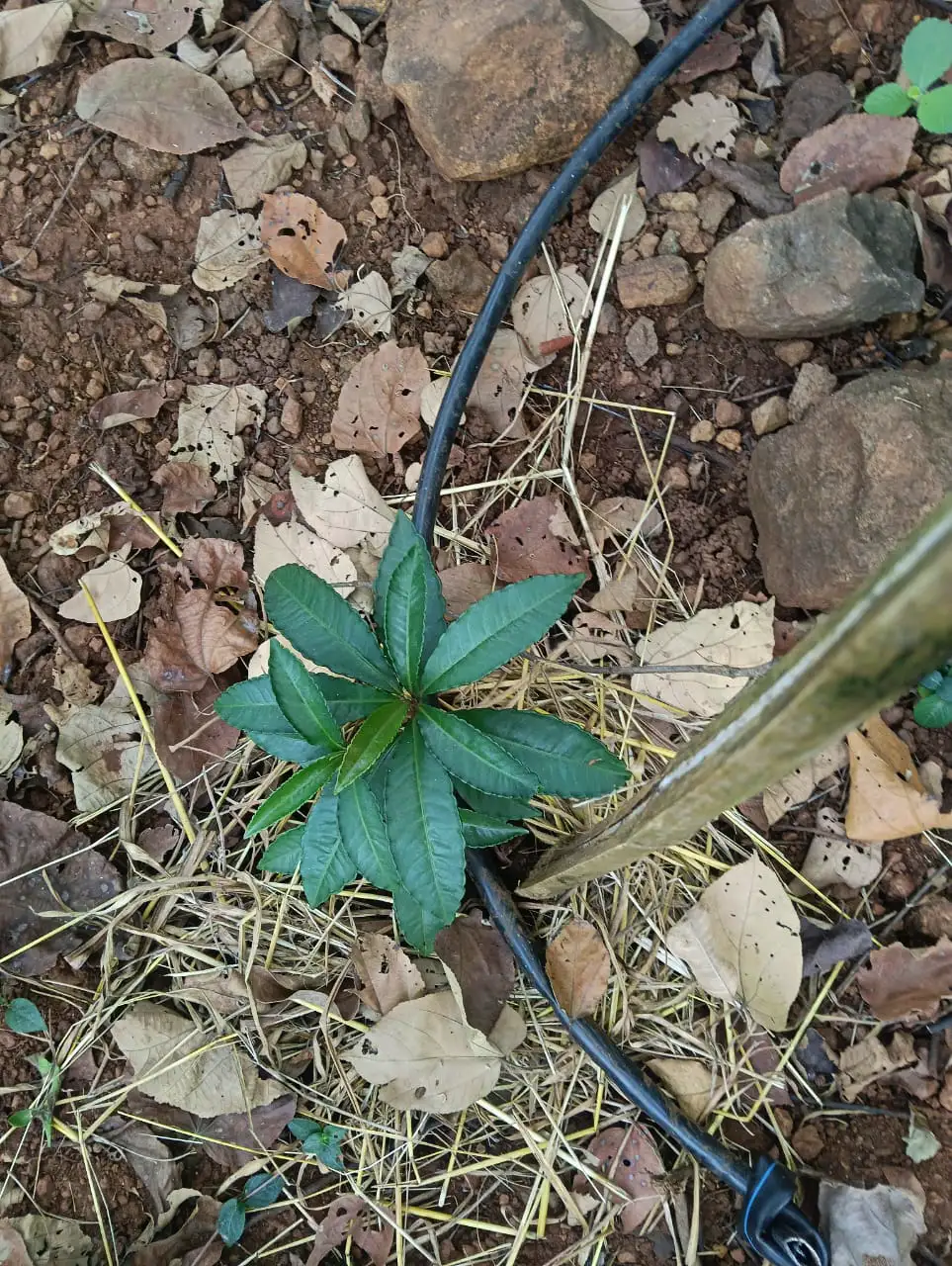
A tiny seedling, mulched, staked and watered by drip. 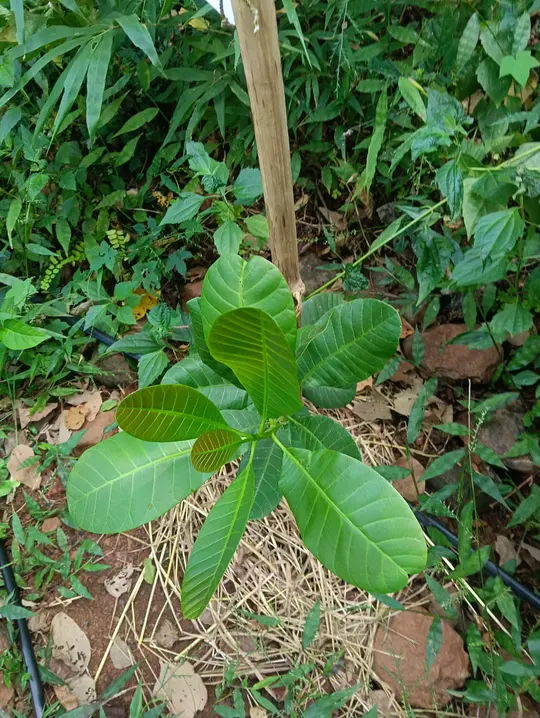
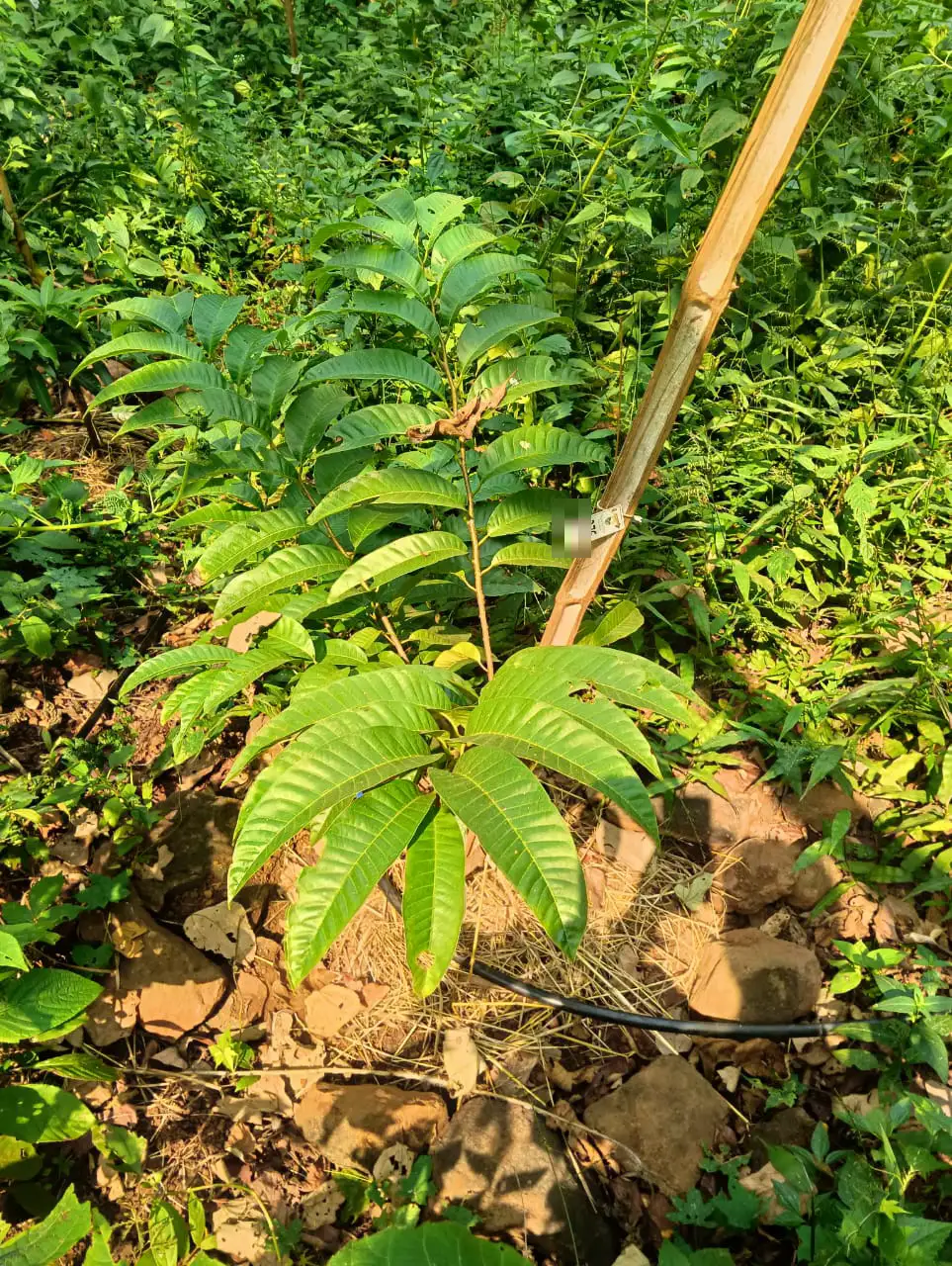
A young sapling settles in on its bed of straw mulch. 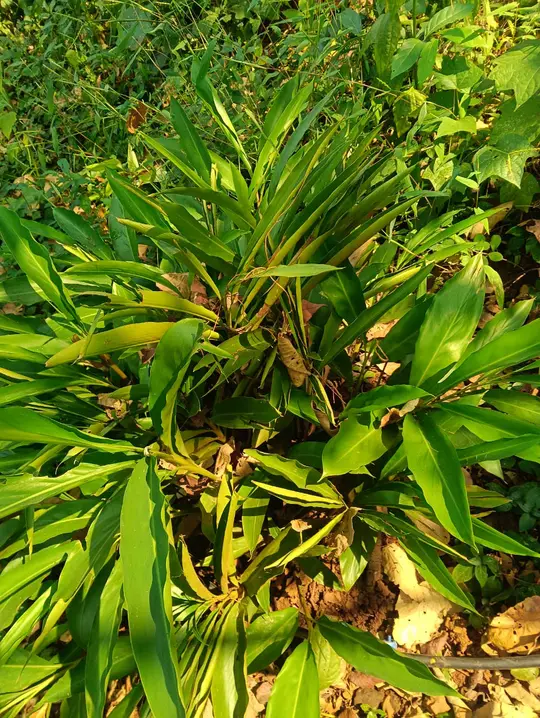
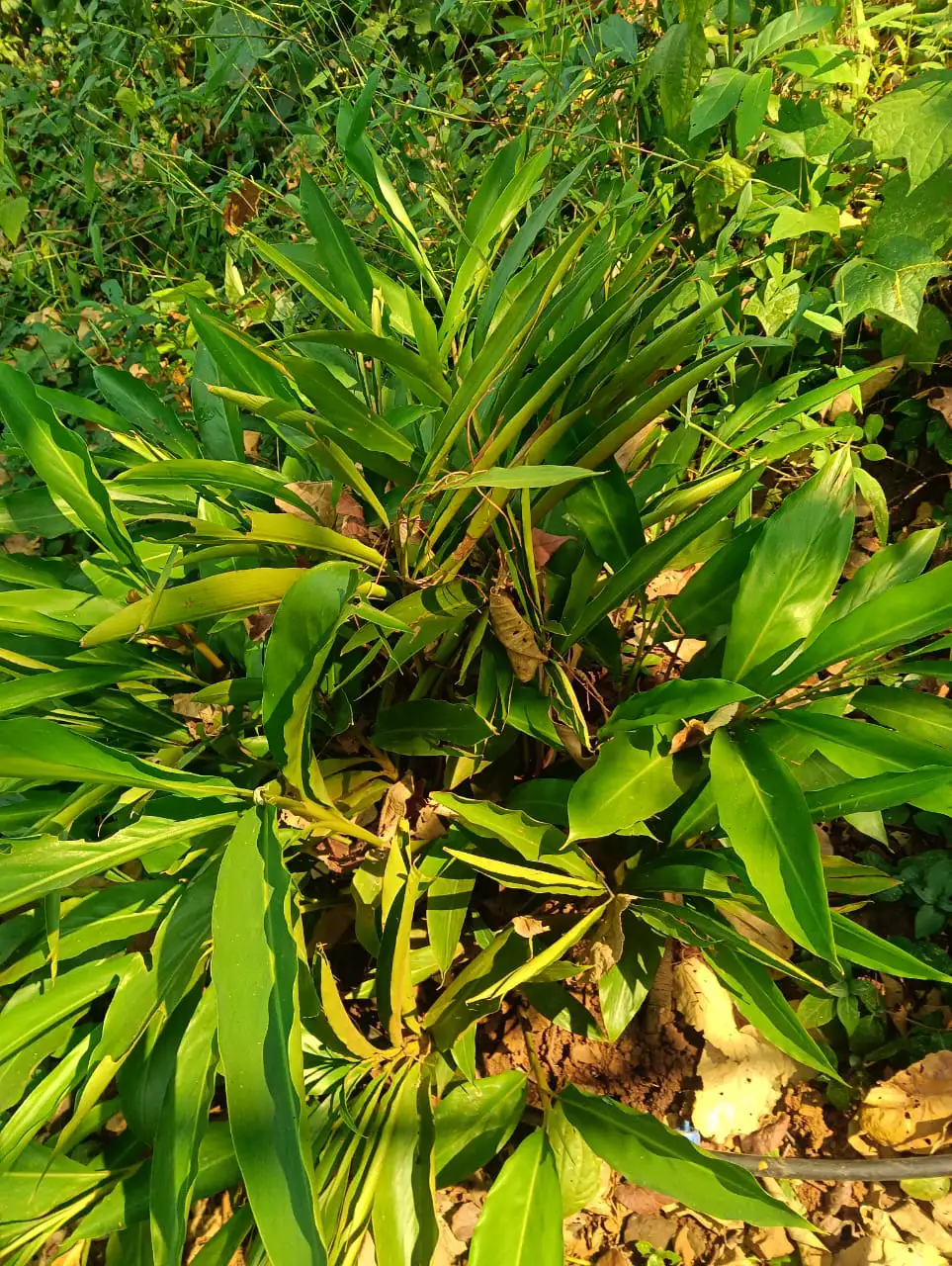
A lush clump of glossy leaves, watered by a drip line. 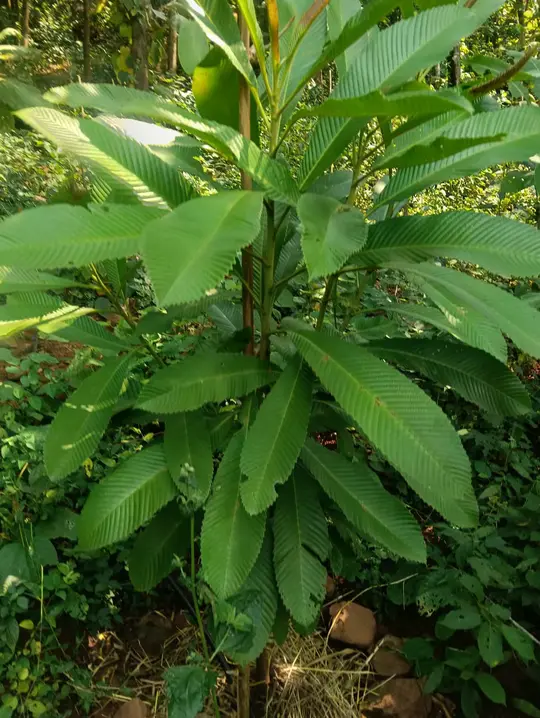
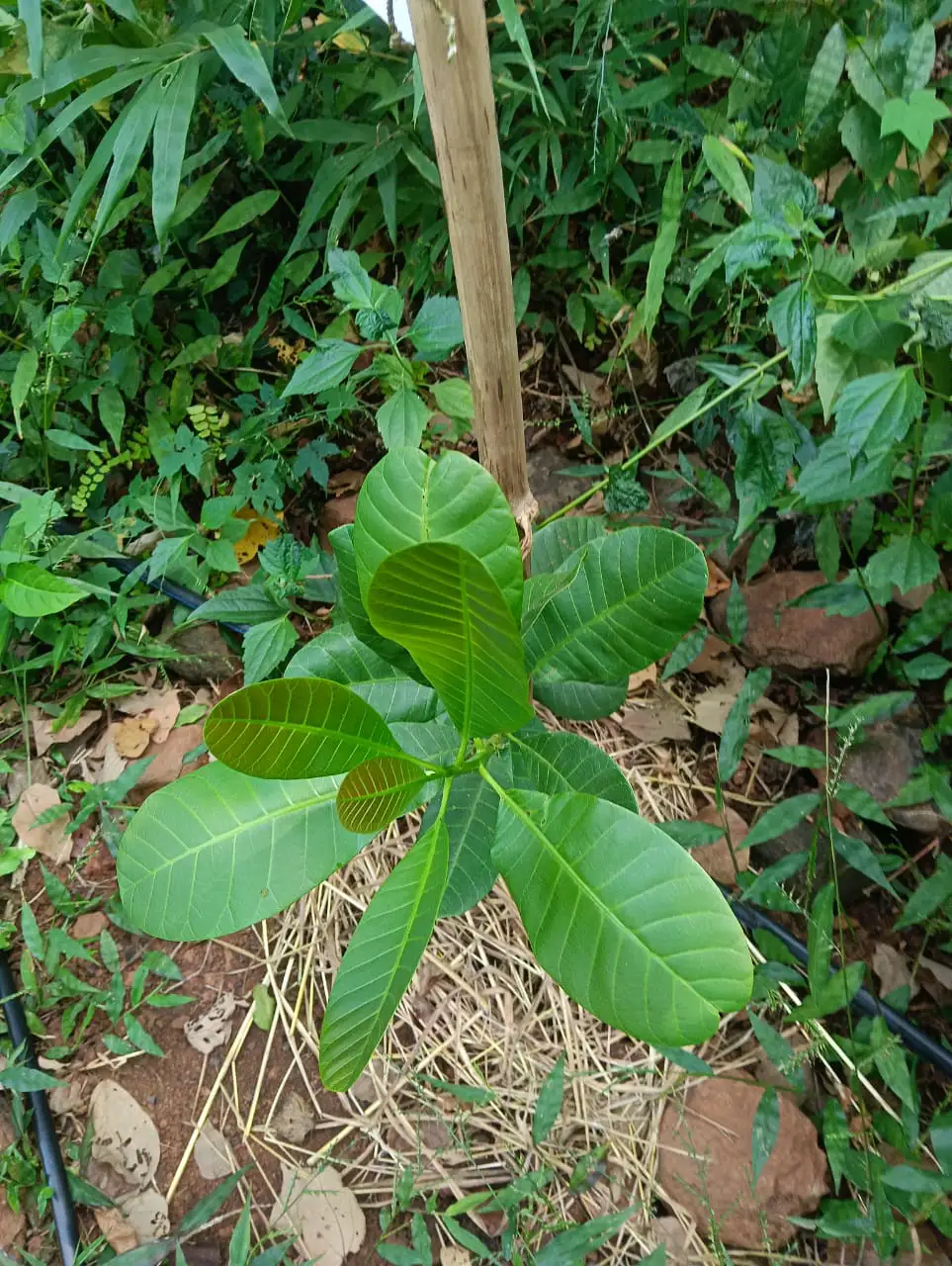
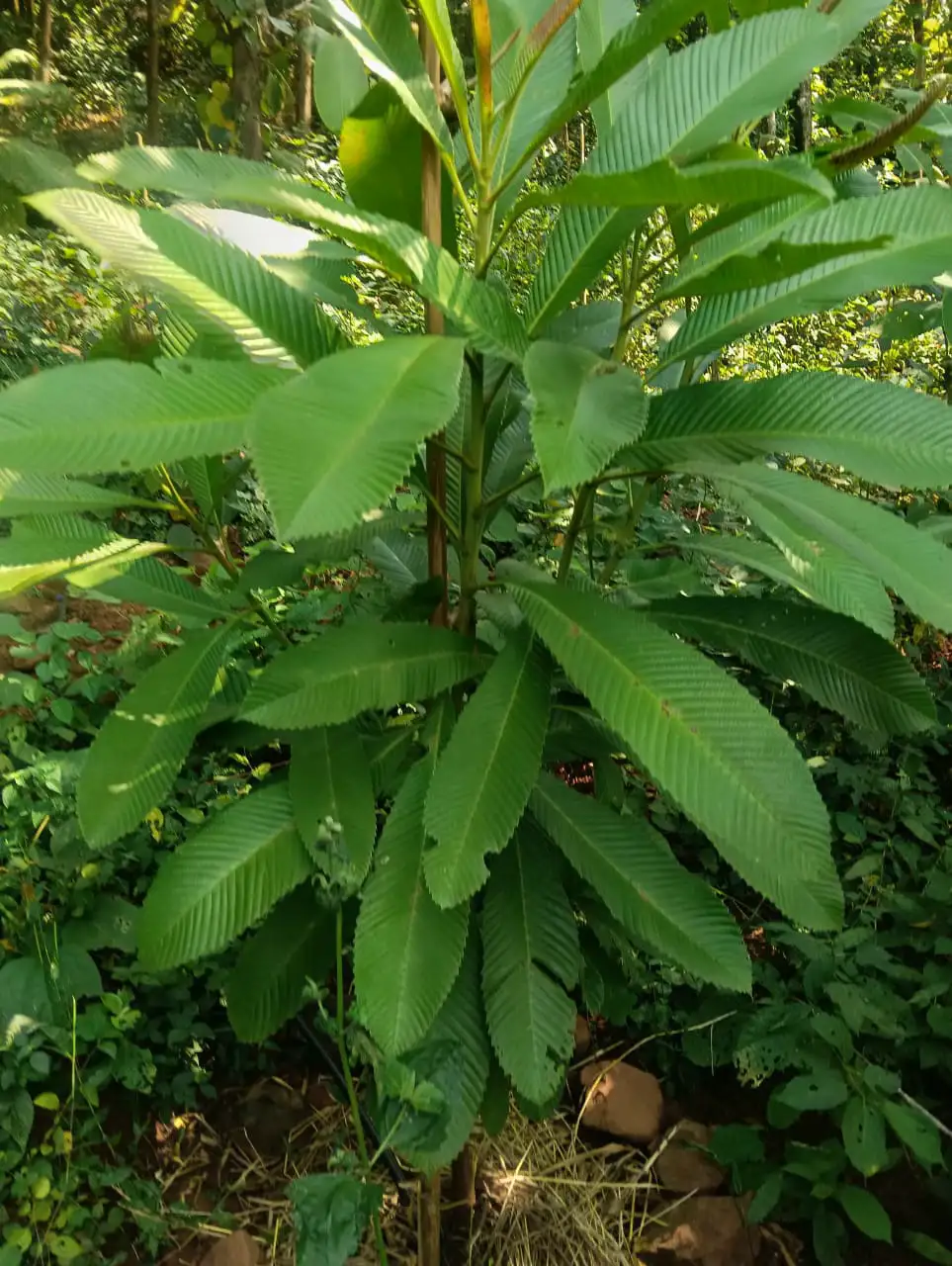
Boldly ribbed leaves on a young tree in the forest shade. 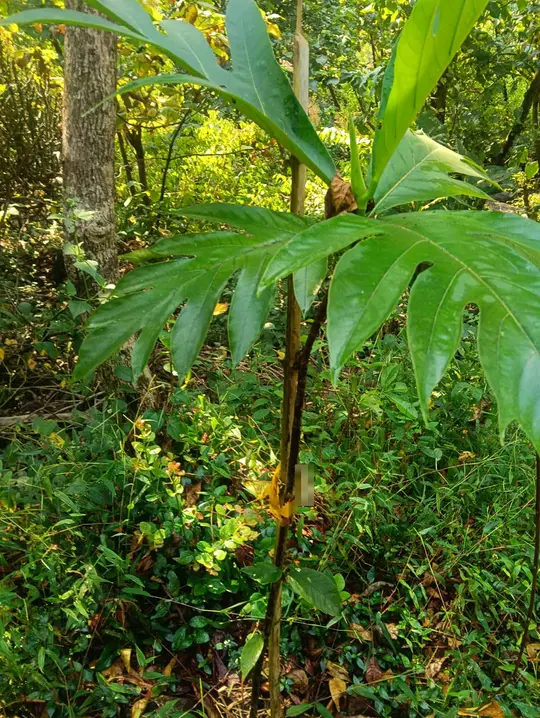
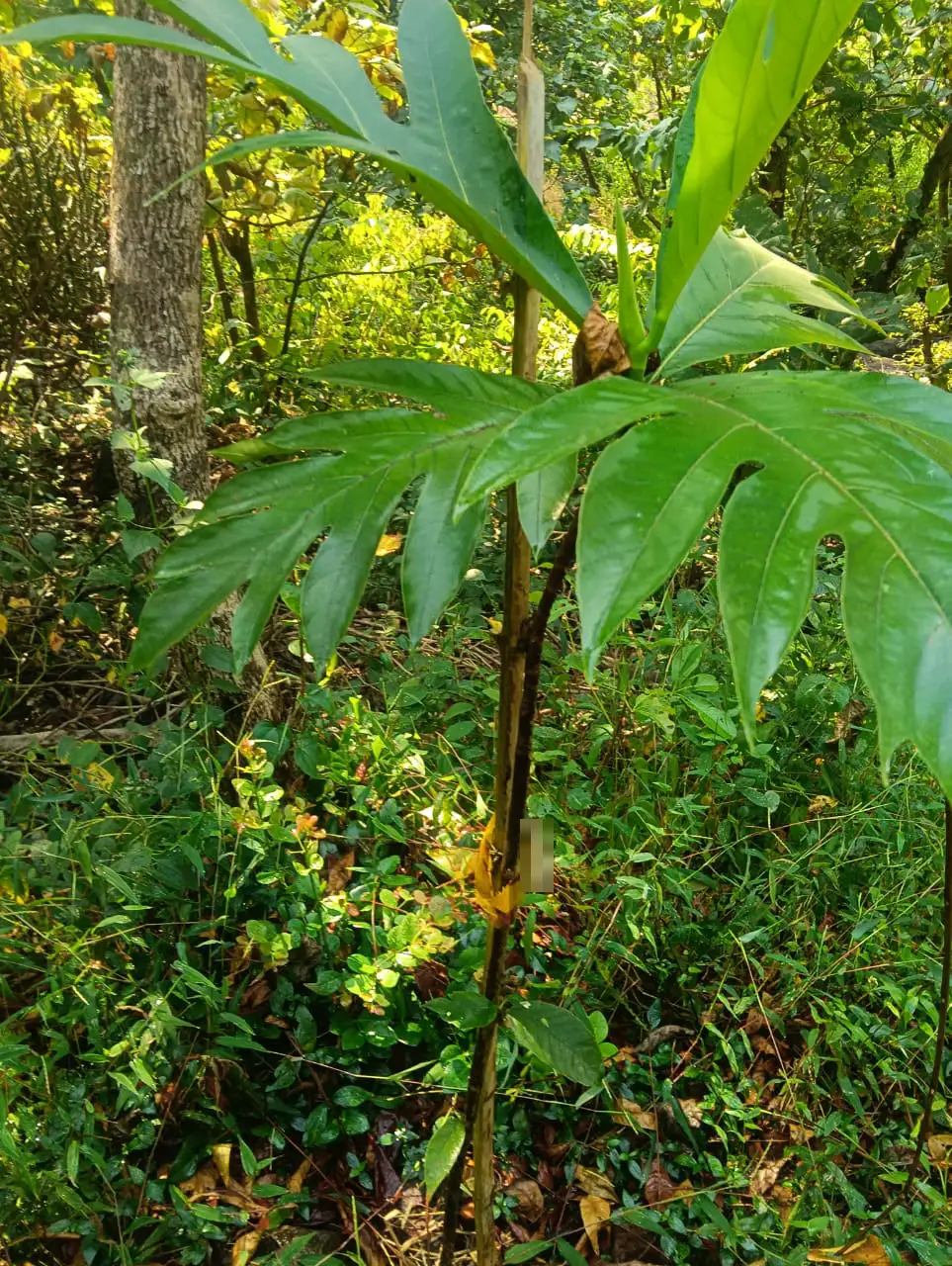
Big, deeply lobed leaves on a staked sapling in the forest undergrowth. 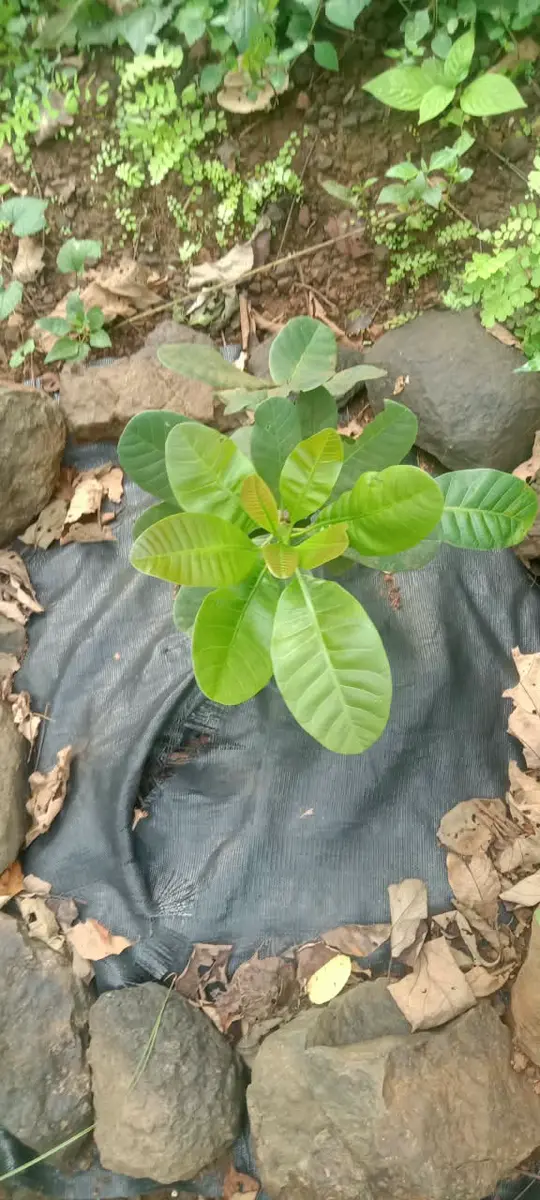
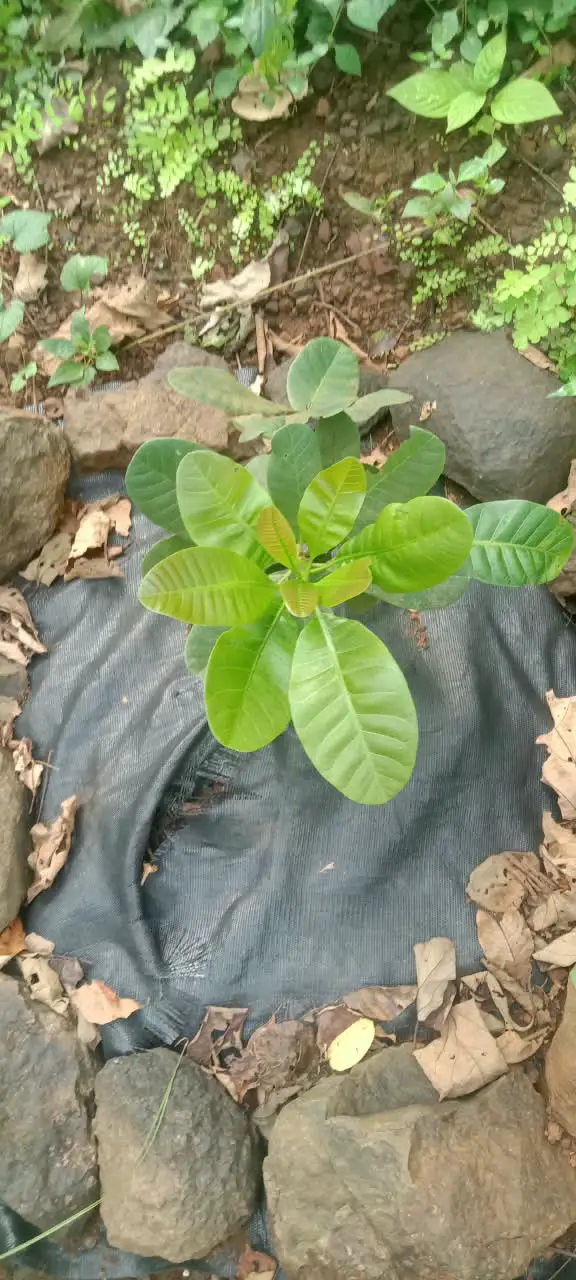
A tiny seedling, snug in its ring of stones. 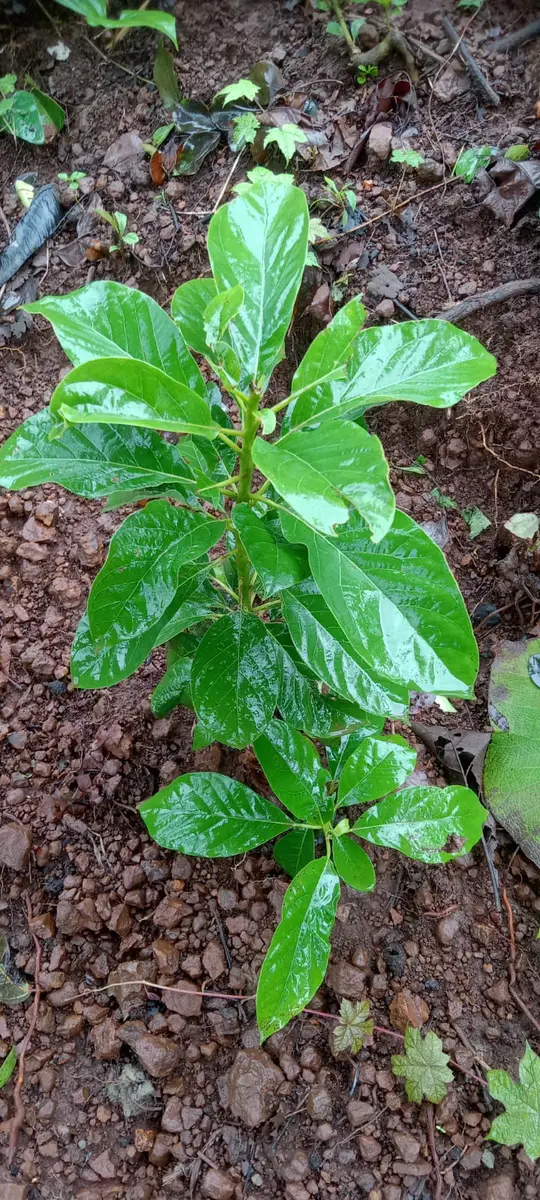
Rain-washed leaves on a young sapling.
Come and see them
Walk-in visitors are welcome.